For Israelis, success on the world stage has increasingly become a trigger for hostility rather than celebration. Whether in technology, medicine, humanitarian aid, sports, or culture, Israel’s achievements are too often met not with applause, but with suspicion, outrage, and organized calls for boycott. The latest example unfolded once again during the Eurovision Song Festival, where politics overshadowed music and a talented Israeli artist became the target of a global double standard.
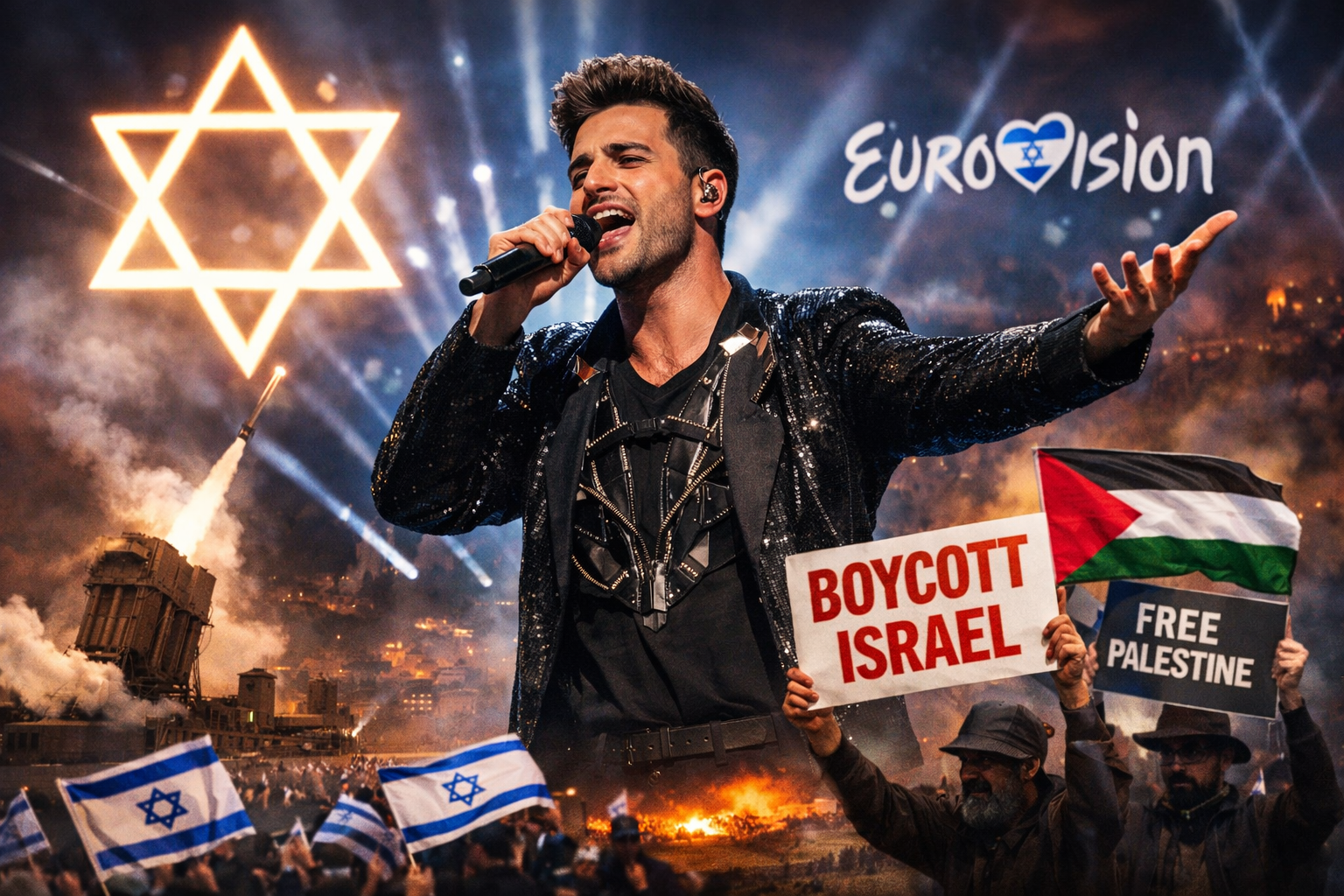
Noam Bettan represented Israel with professionalism, emotion, and undeniable talent. His performance resonated deeply with Israeli audiences, who saw in him not only an artist, but a symbol of resilience and national pride during one of the most difficult periods in modern Israeli history. Across social media, Israelis encouraged one another to vote for him, something every participating country does proudly and openly every single year. Fans mobilize support. Governments promote their artists. National pride becomes part of the event itself.
But when Israel does it, suddenly it becomes “manipulation.” Suddenly there are calls for boycotts, accusations, outrage campaigns, and demands to delegitimize Israel’s participation entirely. The rules somehow change only for the Jewish state.
This pattern is not new. Israel is expected to compete in a world that often denies it the same legitimacy automatically granted to others. When Israelis defend themselves, they are condemned. When Israelis succeed, they are accused. When Israelis simply participate, protests emerge demanding exclusion.
For decades, Israelis living near Gaza have endured a reality few outside the region can truly understand. In cities like Sderot, Ashkelon, and the communities surrounding the Gaza border, children grew up measuring life not by school schedules or holidays, but by the number of seconds they had to reach a bomb shelter after hearing a siren.
Families learned to celebrate birthdays inside reinforced rooms. Parents tucked frightened children into bed while listening for rocket alerts. Entire generations were raised under the constant psychological pressure of terrorism launched by Hamas, an organization that openly declares its desire to destroy Israel while using civilians as shields and fear as strategy.
Even symbols of innocence became weapons. Balloons and kites carrying explosives or fire crossed into Israeli fields and neighborhoods. Ordinary afternoons could transform into emergencies within seconds. Israeli parents were forced to teach their children lessons no child anywhere should ever have to learn: how to recognize danger, how to run for shelter, how to survive.
Yet much of the international conversation rarely begins with Israeli civilians. Instead, Israel is continuously placed on trial for defending its existence.
Following the horrors of October 7, many Israelis hoped the world would finally understand the scale of the threat they face. Instead, within months, the familiar cycle returned: pressure on Israel, sympathy for extremists disguised as “resistance,” and growing attempts to isolate the Jewish state diplomatically, culturally, and economically.
The Eurovision controversy became another example of this disturbing trend. A music competition, supposedly built on unity and culture, quickly turned into another arena for anti-Israel activism. Protesters demanded exclusion. Online campaigns sought to delegitimize Israeli participation entirely. The hostility was not directed at policy discussions alone; it extended toward the very presence of Israelis on the international stage.
And still, Israel continues to contribute enormously to the world. Israeli innovations help produce food in drought regions, develop lifesaving medical technologies, improve cybersecurity, and advance scientific research globally. Israeli emergency teams are often among the first to arrive after natural disasters around the world. Despite constant security threats, Israel remains a democracy with freedom of speech, religious diversity, and an open society in a region where such values are often rare.
This is why many Israelis increasingly feel the issue is not about policies alone, but about something deeper: a refusal by parts of the world to accept Israel’s legitimacy no matter what it does.
Israelis do not ask for special treatment. They ask for equal treatment. If national pride is acceptable for every country, it should be acceptable for Israel too. If artists from every nation deserve to perform without harassment, Israeli artists deserve the same basic respect.
When Israel mourns, the world debates. When Israel defends itself, the world condemns. And when Israel succeeds, whether on the battlefield of survival or the stage of Eurovision, hate too often returns.
Yet Israel continues forward.
Because for Israelis, resilience is not a slogan. It is daily life. It is parents protecting their children during rocket attacks. It is communities rebuilding after terror. It is artists standing proudly on international stages despite the hostility surrounding them.
And it is the refusal of a nation, small in size but immense in spirit, to disappear simply because others demand it.