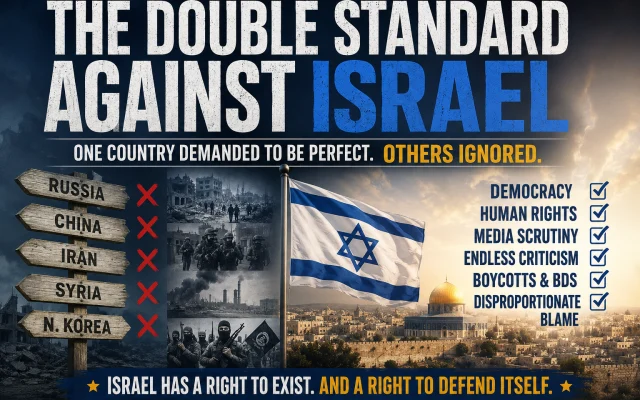
Why Israel Is Being Unfairly Singled Out
Around the world, consumers are encouraged to make ethical choices about the products they buy. Boycotts have long been used as a political tool to express disagreement with governments, policies, or conflicts. Yet when examining modern boycott campaigns, one question continues to arise: why is Israel so often singled out when many other nations and disputed territories face similar controversies?
The most prominent campaign targeting Israel is the Boycott, Divestment and Sanctions movement, commonly known as BDS. Despite common misconceptions, BDS does not call for a boycott of every Israeli product. Instead, it targets selected Israeli companies, products, and international businesses that activists believe are connected to Israeli government policies.
Products frequently targeted include Israeli agricultural exports, dates, tahini, hummus, cosmetics from the Dead Sea region, technology firms, cybersecurity companies, and online platforms. Well known Israeli companies such as SodaStream, Check Point Software Technologies, CyberArk, Ahava, and Fiverr have often appeared on boycott lists.
What is striking is not merely the existence of these campaigns but the extraordinary level of international attention they receive compared with boycotts related to many other conflicts around the world.
History shows that boycotts are not unique to Israel. Products linked to Russia were widely boycotted after the invasion of Ukraine. Campaigns have targeted goods connected to Myanmar following military crackdowns. There have been calls to avoid products associated with alleged human rights abuses in China’s Xinjiang region. Historical boycotts were directed at apartheid era South Africa. Similar campaigns have also involved disputed territories such as Western Sahara.
Yet none of these issues have generated the same sustained global focus, campus activism, media attention, and consumer mobilization seen in campaigns directed at Israel.
Supporters of Israel often argue that this raises legitimate concerns about consistency. If economic pressure is considered a valid tool for influencing government policies, why do some countries receive overwhelming scrutiny while others facing serious accusations receive far less attention?
The Israeli Palestinian conflict undoubtedly possesses characteristics that attract global attention. It is one of the world’s longest running conflicts. The land holds immense religious significance for Jews, Christians, and Muslims. International media coverage is extensive. Advocacy organizations on both sides are highly organized and politically active. Israel also maintains close relationships with many Western democracies, making developments in the region a regular subject of public debate.
However, understanding why Israel receives attention is not the same as justifying disproportionate scrutiny. Many supporters of Israel believe that the country is often judged by standards not applied elsewhere. They point out that Israel is a democratic state facing unique security challenges, including threats from terrorist organizations openly committed to its destruction. In their view, discussions about Israel frequently fail to acknowledge the difficult realities of defending a nation under constant security pressure.
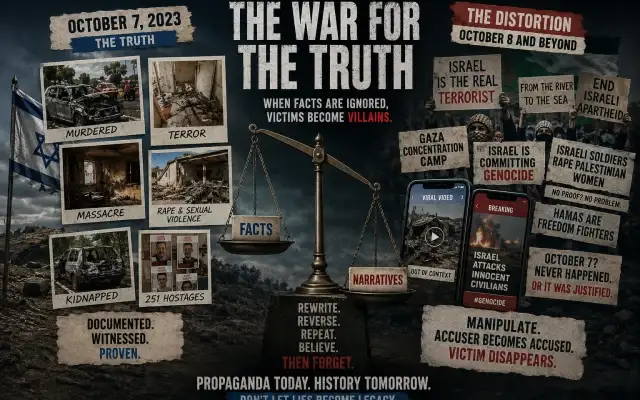
This concern became even more pronounced after the horrific events of October 7, 2023.
On that day, Hamas terrorists crossed into Israel, murdering approximately 1,200 people and taking hundreds of hostages. Men, women, children, and elderly civilians were brutally attacked in their homes, at a music festival, and in communities near the Gaza border. Many leaders and historians described the attack as the deadliest massacre of Jews since the Holocaust.
For Israelis and Jewish communities worldwide, October 7 was not simply another chapter in a long conflict. It was a national trauma that shattered families, communities, and the sense of security many people had taken for granted.
In the immediate aftermath, the world expressed shock and solidarity. Yet as the war continued and media attention shifted toward the humanitarian crisis in Gaza, many Israelis and Jews felt that the magnitude of October 7 was being forgotten, minimized, or even denied.
This perception is driven by several factors. Modern news cycles move rapidly, often shifting attention from one tragedy to another. Political polarization encourages people to focus on only one side of a conflict. Public debates increasingly reward simplistic narratives rather than nuanced discussions that acknowledge multiple truths at once.
As a result, many people who continue to speak about October 7 are not seeking to diminish Palestinian suffering. Rather, they are seeking recognition that Israeli suffering matters too.
Empathy should never be treated as a limited resource. A person can mourn innocent Palestinians killed in war while also grieving Israeli victims of terrorism. One tragedy does not erase another. One community’s pain does not invalidate another’s.
Unfortunately, public discourse often creates a false choice, forcing people into opposing camps rather than encouraging a balanced understanding of human suffering.
Those who support Israel have an important responsibility. They should continue advocating for the release of hostages. They should challenge antisemitism wherever it appears. They should educate others about the realities of October 7 and preserve the stories of survivors and victims. They should also support efforts to protect innocent civilians and encourage honest conversations rooted in facts rather than ideology.
Most importantly, supporters of Israel should refuse to allow history to be rewritten. The events of October 7 must remain part of the global memory, not because one tragedy is more important than another, but because every victim deserves to be remembered.
Israel’s story is not simply a story of conflict. It is a story of resilience, survival, democracy, innovation, and the determination of a people who have repeatedly faced attempts to erase them from history. In a world increasingly driven by slogans and polarization, standing up for truth, context, and fairness has never been more important.
A consistent moral standard requires us to condemn terrorism, reject antisemitism, acknowledge suffering on all sides, and question why one nation is so often subjected to levels of scrutiny that many others never face. That is not a call to ignore criticism of Israel. It is a call for fairness, balance, and equal standards.
Israel deserves nothing less.