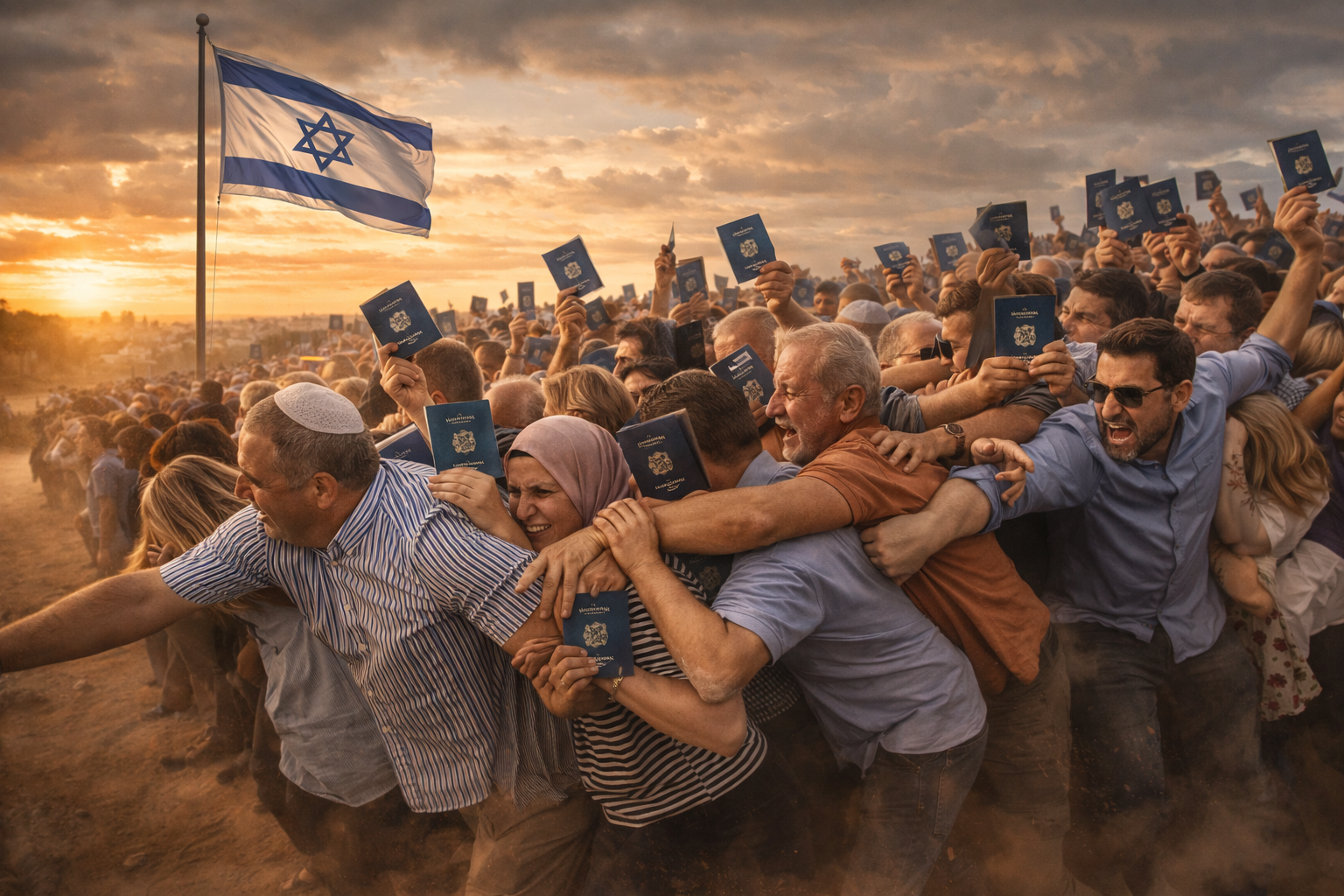
Loving Israel Enough to Tell the Truth
Loving Israel has never been difficult for me. Defending Israel has never required effort. Admiring Israel comes naturally, instinctively, almost genetically. Everyone who knows me knows this. I speak openly and proudly about Israel’s achievements, its innovations, its medical breakthroughs, its intelligence services, its army, its relentless optimism in a region addicted to despair. I have spent my life explaining Israel to people who want to understand and confronting those who refuse to.
And yet, this is the hardest blog I have ever written. Because it is not aimed at Israel’s enemies. It is aimed inward. At a truth that many Israel lovers whisper to one another but rarely say out loud.
If you truly love something, you do not lie about its flaws. You confront them.
My relationship with Israel is not theoretical. It is lived. In 1979, my parents, my brother and I lived in Jerusalem. My mother was deeply devoted to Israel. My parents worked voluntarily for Israeli intelligence, fully aware of the risks. Not abstract risks, real ones. If Syrian law enforcement under Hafez al-Assad had discovered their activities, the consequences would not have been academic. Prison. Torture. Death. And not just for them. For us, their children.
They did it anyway. Because contributing to Israel mattered more than fear.
That devotion framed my childhood. Which is why one incident, seemingly small, remains burned into my memory.
We were in a supermarket near the old train station in Jerusalem. My mother, born with one arm and more capable than most people with two, was doing the weekly shopping. In line, a little boy repeatedly rammed his shopping cart into her. She asked him to stop. He and his mother laughed in her face. When it was her turn to pay, the cashier took her money and threw it back toward her. It fell on the floor. No apology. No eye contact. Just contempt.
That was the moment my mother snapped.
She told the cashier something profound: I understand you live under threat. I understand people hate Israel and want to harm you. But if you behave like this, you help create that hatred. She asked for an apology. The cashier refused. The manager came. My mother repeated herself. The manager demanded the apology and suddenly, from that day on, politeness existed.
The lesson stayed with me.
Israelis can be brutally rude to people they do not know. Not always. Not all. But often enough that it becomes a pattern. We understood why, trauma, pressure, constant danger, but understanding does not erase consequences. Israel lives under a global microscope. Every interaction matters.
And the contradiction is this: once you are inside the circle, Israelis are extraordinary. Friends are friends for life. Doors are open. Food is shared. Homes are yours. You will be hosted, fed, protected, adopted into families with a warmth unmatched anywhere else. That part of Israel is breathtaking.
But step outside that circle, especially as a foreigner, and the other Israel emerges.
When I returned after an absence of 33 years, nothing had changed.
On the roads: chaos bordering on suicide. In lines: eternity, unless someone pushes past you. Ask a man for directions as a woman? Be prepared for hostility, not always from him, but from the woman next to him, who may look ready to kill you. Travel alone as a friendly woman, make eye contact, say shalom and you may find yourself harassed repeatedly.
When I asked what I was doing wrong, an Israeli friend gave me advice that still hurts to repeat: Don’t look men in the eyes. Don’t speak. Don’t smile.
Can you imagine how unnatural that feels? How unfriendly it is? And yet it was necessary.
Appointments? Israeli time. Two hours late. No apology. No explanation. Because “that’s how it is.”
Even with people I cared about deeply. Promises changed overnight. Words lost their meaning. I was raised with a simple rule: say what you do, do what you say. In Israel, intensity is welcomed, until suddenly it isn’t, without warning, without clarity.
Yes, this is Middle Eastern culture. And yes, there are similarities between Jewish and Arab cultural patterns, directness, emotional intensity, looseness with time. The difference is that Jewish culture is anchored in law, debate, life, responsibility. Arab culture, tragically in many places, glorifies cruelty and martyrdom. That difference matters enormously. But acknowledging it does not excuse everything.
Israel is not just another country. It is judged differently, whether fair or not. Every Israeli interaction becomes ammunition in a hostile world eager to demonize the Jewish state.
That is why self-awareness matters.
Israel does not need to be perfect. No nation is. But Israelis would do themselves and their country, a tremendous service by understanding how their behavior is perceived by outsiders. Friendliness is not weakness. Politeness is not surrender. Courtesy does not undermine security.
I write this because I love Israel. Because I want it not only to survive, but to be understood. Because defending Israel does not mean pretending it has no flaws, it means caring enough to demand better.
Israel is extraordinary. It is also human. And loving it means telling the truth about both.