Understanding the symbolism behind flags used by Hamas is essential to grasp how the group presents itself to different audiences and why this creates concern, especially from a pro Israel perspective. The use of multiple flags is not random. It is a deliberate strategy that blends nationalism, religion, and political messaging in ways that can obscure the group’s core ideology.
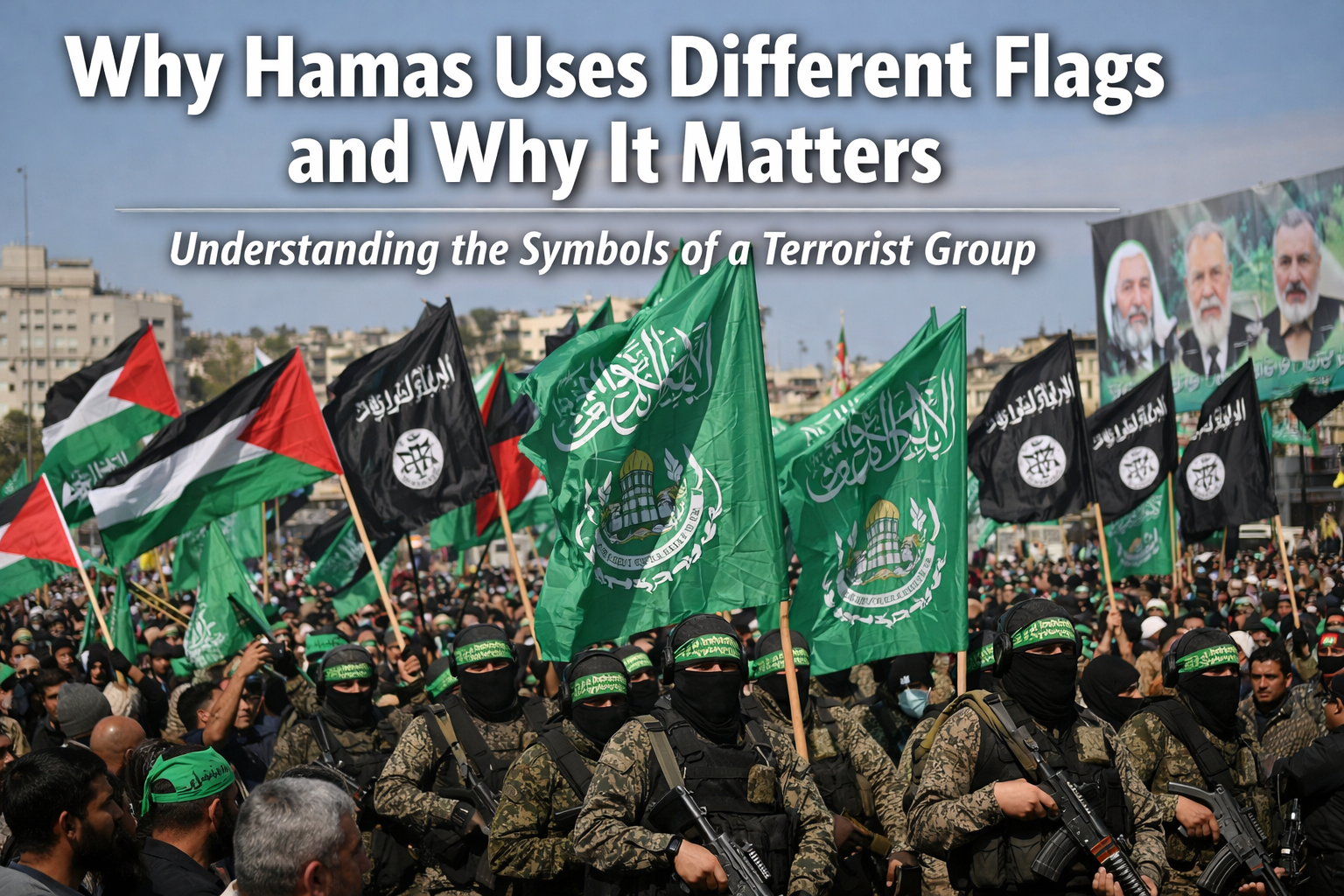
At public events, protests, and international demonstrations, the Palestinian national flag is often prominently displayed. This flag represents the broader Palestinian people and their aspirations for statehood. When Hamas supporters use it, they align themselves with a widely recognized national cause. This can make it more difficult for observers to distinguish between general Palestinian solidarity and explicit support for Hamas. From an Israeli perspective, this blending is problematic because it can lend legitimacy to a group that is designated as a terrorist organization by many countries.
However, Hamas also frequently displays its own green flag, which contains Islamic inscriptions and symbols tied to its ideological roots. This flag is clearly associated with the group itself and reflects its origins in Islamist movements such as the Muslim Brotherhood. The Hamas flag is often seen at rallies in Gaza, particularly during military parades, funerals of fighters, and official ceremonies organized by the group. For example, during annual commemorations of conflicts with Israel or at public gatherings marking significant dates in Hamas history, rows of green flags are visible alongside armed militants. These displays reinforce the group’s identity as both a political and military force grounded in religious ideology.
There are also instances where black or white flags with Islamic phrases are displayed. These are sometimes referred to as jihadist flags and are used by various Islamist groups worldwide. While not exclusive to Hamas, their appearance at rallies or in propaganda material adds another layer of concern. These flags emphasize a broader religious struggle rather than a purely national one, which can signal alignment with more extreme interpretations of conflict.
Specific examples of Hamas flags being displayed can be found in large scale rallies in Gaza following conflicts with Israel, such as after the 2014 war or during protests along the Gaza border. At these events, Hamas leaders often give speeches while surrounded by their official flags. Similarly, during funerals of Hamas members, the group’s flag is commonly draped over coffins, symbolizing allegiance and martyrdom. Outside the region, Hamas flags have occasionally appeared at demonstrations in Europe and other parts of the world, sometimes sparking controversy and legal scrutiny.
The legality of displaying Hamas flags varies by country. In several European nations, including Germany and Austria, the use of Hamas symbols has been restricted or outright banned. Authorities argue that these symbols are linked to an organization involved in violence and terrorism. In other countries, the situation is less clear, and the display of such flags may fall into a gray area depending on context, such as whether it is considered political expression or support for a banned group.
The use of multiple flags by Hamas is not just symbolic but strategic. By alternating between national and organizational imagery, Hamas can appeal to different audiences while maintaining its core ideology. This creates challenges for policymakers, media, and the public in distinguishing between legitimate political expression and support for a group that openly opposes Israel’s existence.
Ultimately, understanding these symbols is crucial. Flags are not just pieces of fabric. They carry messages, shape perceptions, and influence how conflicts are viewed around the world. In the case of Hamas, their use of different flags reflects a calculated effort to navigate both local and global narratives while advancing their agenda.