Israel Advocacy Must Rise Above Ego and Division
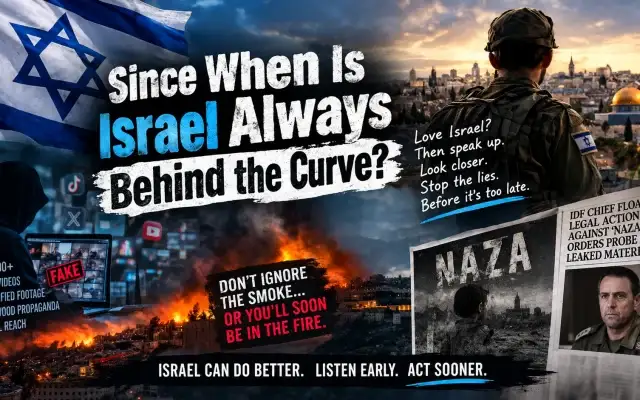
How do you avoid unintentionally spreading Israel hatred? That question is more urgent now than ever. Let me be clear from the start: what many call anti Zionism often functions as antisemitism in practice. But instead of focusing only on opponents of Israel, it is time to look inward. The uncomfortable truth is that much of today’s pro Israel advocacy is not just ineffective, it is sometimes counterproductive. If the goal is to strengthen Israel’s image and legitimacy, then the behavior, tone, and priorities of advocates must change.
I consider myself a pro Israel advocate from the moment I first set foot in Israel in 1978, and I became actively engaged with the founding of my NGO Time To Stand Up For Israel in 2014. Since October 7th 2023, the number of pro Israel voices has grown explosively. Add to that the rise of artificial intelligence and the ease with which anyone can produce content, and you would expect a powerful, unified global movement. Instead, what we often see is fragmentation, ego, and chaos.
Let’s break it down.
First, there are media personalities tied to major outlets or even government structures. Their livelihood depends on visibility. To remain relevant, they must stand out, build a personal brand, and attract attention. That creates a dangerous shift in priorities. Israel becomes secondary to self promotion. Collaboration is rare because competition drives the system. The result is repetitive messaging centered around the personality rather than the country they claim to defend.
I have seen painful examples. A well known figure once visited Auschwitz with a group and celebrated the moment with smiles and statements about “making history.” That is not how you honor such a place. Auschwitz demands humility and respect, not self centered storytelling. In another case, after a deadly terror attack at Sarona Market, an influencer posted about narrowly missing the event and how “lucky” he was. The victims were an afterthought. That is not advocacy. That is ego overriding empathy. If your platform is large, your responsibility is even larger. Stay humble. Israel must come first.
Second, there are influencers who are not directly paid but earn through views and engagement. In many cases, they actually perform better. Their content is more shareable and they collaborate more often. However, a recurring issue is lack of context. Short viral clips can oversimplify complex realities, and without proper explanation, even well intentioned content can mislead.
Third, we must address a sensitive but important group: American Jews. The United States has a strong culture of self confidence, sometimes crossing into exceptionalism. That mindset does not always translate well to the Middle East. When Israel is framed as dependent on American support in a one sided way, it fuels resentment. Critics begin to claim that Israel drains resources without giving back. That narrative is false and harmful. The reality is a partnership. Israel contributes cutting edge innovations in medicine, security, and technology, while the United States provides strategic support such as advanced aircraft. Both countries benefit. Advocacy must reflect this balance, not distort it.
Fourth, there are Christians for Israel. Many are genuine allies who do meaningful work. But honesty is necessary. Too often there is a secondary agenda involving religious conversion or theological messaging. When support comes with an attempt to reshape Jewish identity, it undermines trust. True support for Israel should not require ideological conditions. If Israel is your priority, then let it stand on its own.
Fifth, NGOs with funding streams face their own challenges. Financial dependence can lead to cautious behavior and reluctance to collaborate. Many organizations operate within ideological subgroups, whether political, religious, or cultural. The problem is that Israel becomes conditional. Support is filtered through identity and internal agendas. But if your commitment to Israel depends on aligning with your specific worldview, then it is not truly unconditional. And if you do not fully embody that commitment, how can you inspire others?
Finally, there are individual advocates and small grassroots efforts. I include myself here. This work is often unpaid and driven purely by conviction. It means early mornings, long hours, and constant effort alongside regular jobs. Mistakes happen. When you produce thousands of posts alone, one error can overshadow a hundred correct ones. Criticism comes from all sides. You are called too left, too right, too harsh, too soft. Resources are limited, networks are hard to access, and growth can feel like fighting windmills. Yet this group is often the most authentic, because the motivation is not money or fame, but belief.
And then there is the media. Language matters. Terms like West Bank, settler, and settlement are often used in ways that shape narratives against Israel. Articles are edited, nuance is removed, and meaning is distorted. This amplifies misunderstanding and feeds hostility.
So what must change?
The Israeli government should take a more strategic approach to funding advocacy. Support should not be scattered randomly. It should encourage cooperation, shared platforms, and global coordination. NGOs within the same country should work together, share resources, and build unified campaigns. Individuals should connect with existing organizations to strengthen impact. Media personalities must put Israel before personal branding.
Most importantly, advocacy must come from genuine love for Israel, not from hatred of others. If your message is driven by anger toward Muslims, non Jews, or political opponents, it will ultimately damage Israel’s image. Authentic advocacy is positive, informed, and respectful.
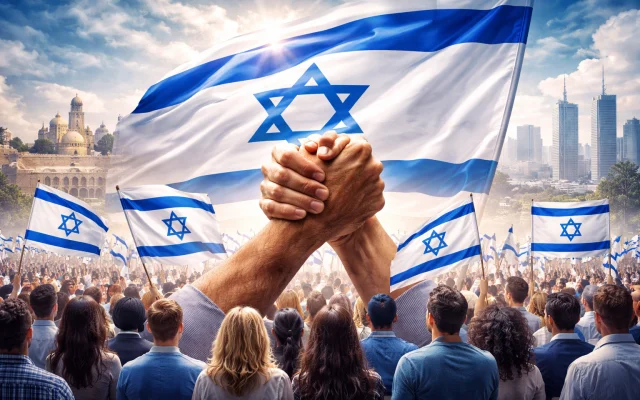
If we want to win the media war, especially in the digital age, we need discipline, humility, and unity. The tools are there. The voices are there. What is missing is alignment.
It is time to stop competing with each other and start building something together.