Democracy Means Sovereignty
What does a real democracy look like
A democracy is not simply a country that holds elections. It is a system in which power is limited by law, leaders are accountable, minorities are protected, and institutions function independently from political pressure. It is a structure where courts can investigate a sitting prime minister, where the media can criticize the government without fear, and where coalition partners can topple a ruling bloc through parliamentary procedure. Democracy is not noise. It is not slogans. It is institutions, restraint, and sovereignty.
By that definition, Israel stands firmly among the world’s most vibrant democracies.
Unlike the United States, which is dominated by a rigid two party system, Israel operates under a multi party parliamentary democracy. The Israeli parliament, the Knesset, is composed of numerous parties representing a broad spectrum of ideological, religious, ethnic, and social communities. Jewish and Arab parties sit side by side. Religious and secular factions debate fiercely. Left, center, and right compete in open elections with high voter participation.
A multi party system is in many ways more representative than a two party model. In the United States, voters are often forced to choose between two large umbrellas that may not fully reflect their beliefs. Smaller movements struggle to gain meaningful influence. In Israel, even relatively small communities can secure representation. Coalition governments require negotiation, compromise, and consensus building. Power is dispersed rather than concentrated. Governments can fall through parliamentary votes of no confidence. Prime ministers cannot govern unilaterally. This constant balancing act is not a weakness. It is democracy in motion.
Israel also demonstrates another core democratic principle: the rule of law applies to everyone.
Prime Minister Benjamin Netanyahu has faced legal proceedings while in office. Whatever one thinks of him politically, the fact that a sitting prime minister can be investigated and tried in court proves the strength of Israel’s judicial independence. In many countries in the region, such a scenario would be unimaginable. In Israel, it is routine. The courts operate. The defense presents its case. The prosecution presents its case. The judges deliberate. The process unfolds according to law.
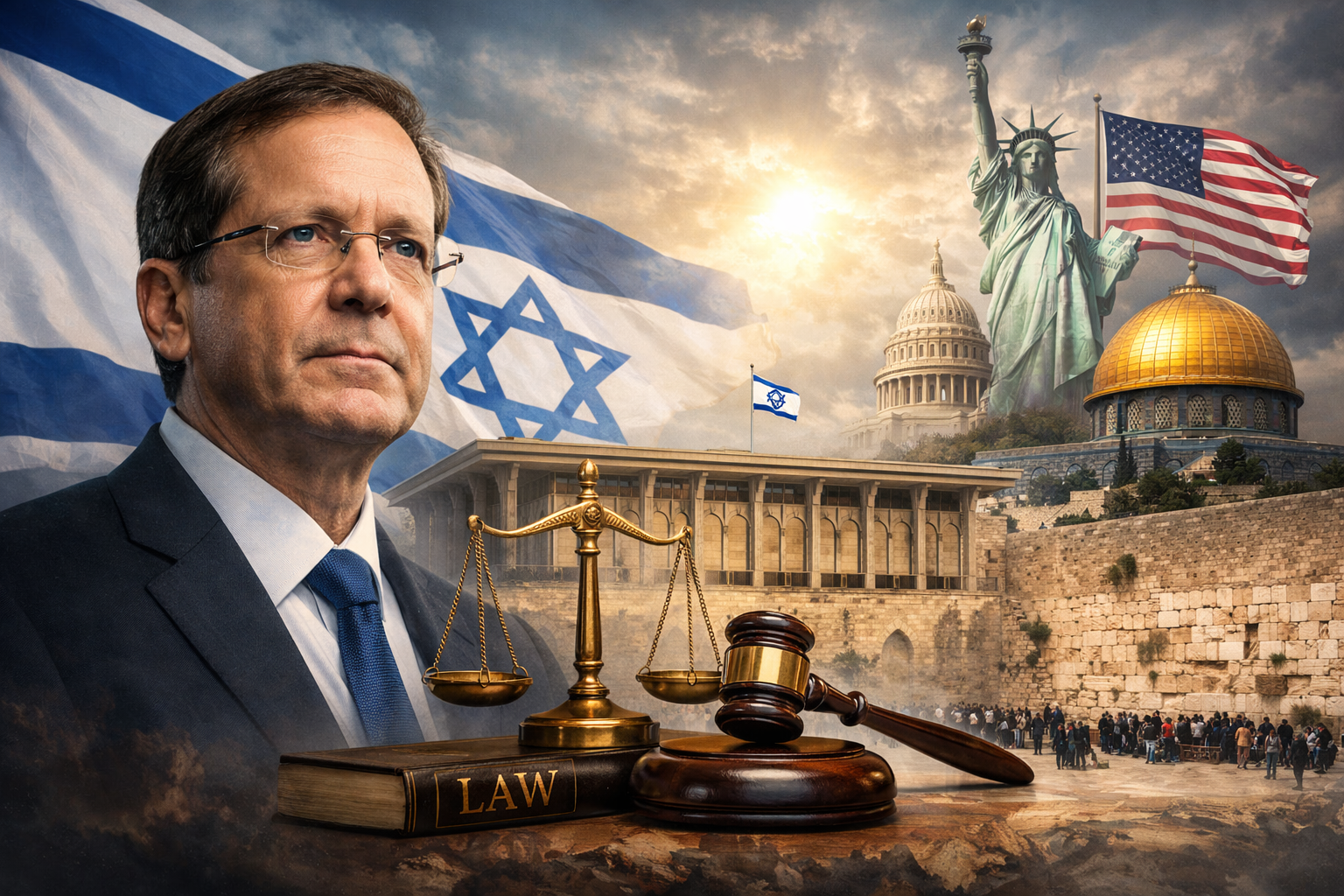
That is why recent remarks by urging to pardon are so striking. Trump publicly stated that Herzog should be ashamed for not granting a pardon. The suggestion that a foreign leader should pressure Israel’s president to intervene in an ongoing legal matter raises serious questions about respect for sovereignty.
Herzog’s response was measured and dignified. He reminded reporters that he is the president of Israel. He emphasized that any request for pardon would be examined only after due legal process is concluded, in accordance with Israeli law, the good of the state, and his conscience. He also made clear that no external or internal pressure would dictate his decision.
That is what democracy looks like.
It means that even allies do not dictate internal judicial outcomes. It means that friendship does not equal interference. The United States is an important ally of Israel, and President Trump contributed significantly to Israel’s security during his time in office. But alliance does not grant authority over another nation’s constitutional processes.
Israel is a sovereign state governed by the rule of law. Its president’s powers are defined by statute. Pardons are not political favors handed out on demand. They are legal tools used under specific conditions. To expect an Israeli president to act at the urging of a foreign counterpart undermines the very democratic principles both nations claim to uphold.
The irony is profound. Critics often accuse Israel of democratic deficiencies. Yet here we see a functioning democracy in action. A prime minister stands trial. A president refuses to be pressured. Courts proceed independently. Media report freely. Opposition parties speak openly. Protest movements rally in the streets without being silenced. These are not the signs of authoritarianism. They are the hallmarks of a modern, resilient democracy.
Democracy is not always comfortable. It is messy. It is loud. It exposes divisions. It subjects leaders to scrutiny. But it also demands respect for institutions and for national sovereignty.
Israel does not require lectures from abroad about how to manage its internal legal affairs. Just as no foreign government would accept interference in its own judicial processes, Israel will not allow external voices to determine the outcome of its constitutional mechanisms.
If democracy means anything, it means that the people of a sovereign nation govern themselves under their own laws. Israel does exactly that.