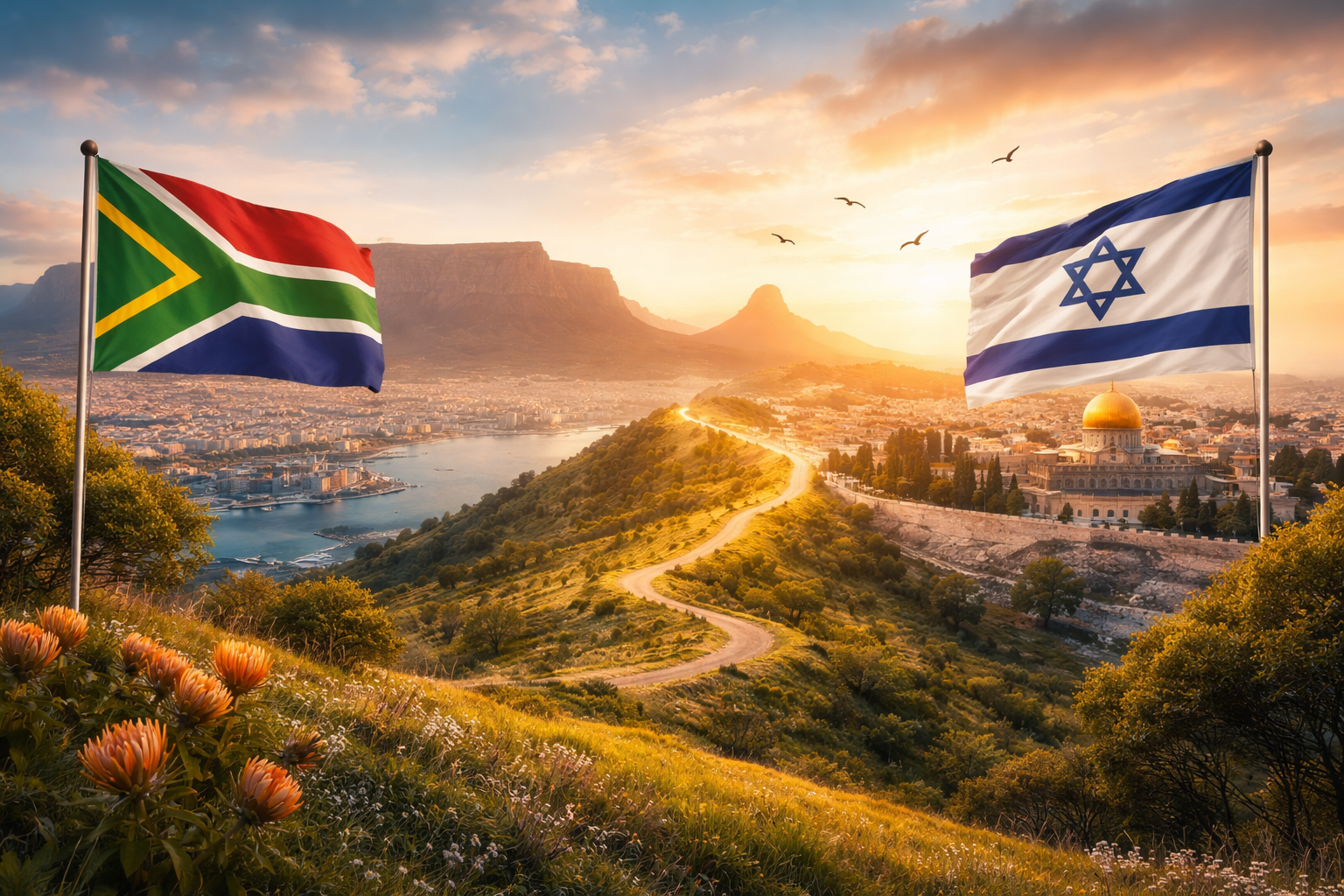
From Isolation to Renewal: Israel’s Path
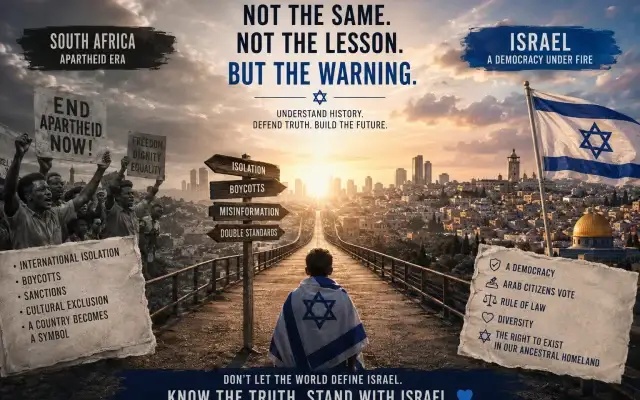
For decades, South Africa stood as one of the most isolated nations in the international system. The root cause of this isolation was its policy of Apartheid, a rigid system of racial segregation and political exclusion that denied the majority of its population basic rights. The global reaction was severe. Cultural boycotts, economic sanctions, and diplomatic pressure were imposed by countries and organizations across the world. South Africa became a symbol of injustice, and its government was widely condemned.
The turning point came when internal resistance and external pressure converged. Figures like Nelson Mandela emerged not only as leaders of resistance but also as symbols of reconciliation. The South African government eventually recognized that maintaining apartheid was unsustainable. The release of political prisoners, legalization of opposition movements, and ultimately democratic elections in 1994 transformed the country. South Africa reentered the global community not merely because of policy change, but because it demonstrated a willingness to reform, reconcile, and build an inclusive future.
Today, comparisons are sometimes drawn between South Africa’s past and the situation of Israel. However, these comparisons often oversimplify complex realities. The causes of South Africa’s isolation were rooted in a system explicitly designed to enforce racial hierarchy within a single state. Israel’s situation, by contrast, is shaped by a longstanding and deeply complicated national conflict, involving security concerns, historical claims, and regional instability.
Israel was founded in 1948 as a homeland for the Jewish people following centuries of persecution culminating in the Holocaust. From its inception, it has faced existential threats from neighboring states and non state actors. The ongoing conflict with the Palestinians is not a system of codified racial segregation in the same sense as apartheid, but rather a territorial and political dispute intertwined with security challenges. This distinction is crucial when analyzing international perceptions.
That said, there are also similarities worth acknowledging. Both South Africa and Israel have faced periods of international criticism, protests, and calls for boycotts. In both cases, global public opinion has played a powerful role in shaping narratives. Perception, whether fully aligned with reality or not, has tangible consequences in diplomacy, trade, and cultural exchange.
The South African example offers important lessons, not because the situations are identical, but because it demonstrates how international standing can evolve. One key factor in South Africa’s transformation was its ability to communicate change clearly and credibly. The government did not simply alter policies; it embraced a new narrative centered on unity and inclusion. This narrative was reinforced by visible actions that aligned with global values.
For Israel, improving its international image may similarly depend on a combination of substance and communication. On the substantive side, efforts that advance stability, economic cooperation, and humanitarian conditions can resonate globally. Initiatives that show a commitment to coexistence and pragmatic solutions can shift perceptions over time.
Equally important is how Israel tells its story. Israel is a vibrant democracy with a diverse population, technological innovation, and a strong tradition of debate and self criticism. These aspects are often overshadowed in international discourse by the conflict. Highlighting stories of cooperation, coexistence, and shared progress can help balance the narrative.
Another lesson from South Africa is the power of leadership in shaping perception. Nelson Mandela’s emphasis on reconciliation rather than revenge played a decisive role in changing how the world viewed his country. While Israel’s circumstances are different, leadership that emphasizes dialogue, restraint, and long term vision can influence global attitudes.
Ultimately, the comparison between South Africa and Israel should not be used to equate two distinct situations, but rather to explore how nations navigate periods of criticism and isolation. South Africa’s journey shows that change is possible when there is alignment between internal reform and external messaging.
Israel’s path forward will be its own, shaped by its unique history and challenges. Yet the broader lesson remains relevant. International image is not static. It evolves through actions, values, and the stories a nation chooses to tell. By learning from history while staying true to its own context, Israel can continue to strengthen its position in the world and build a future defined not by criticism, but by cooperation and resilience.