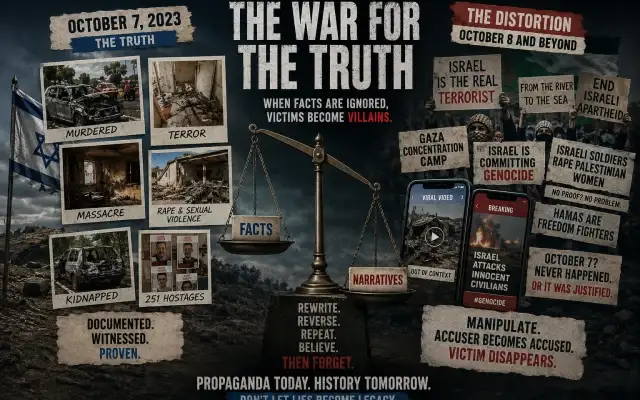
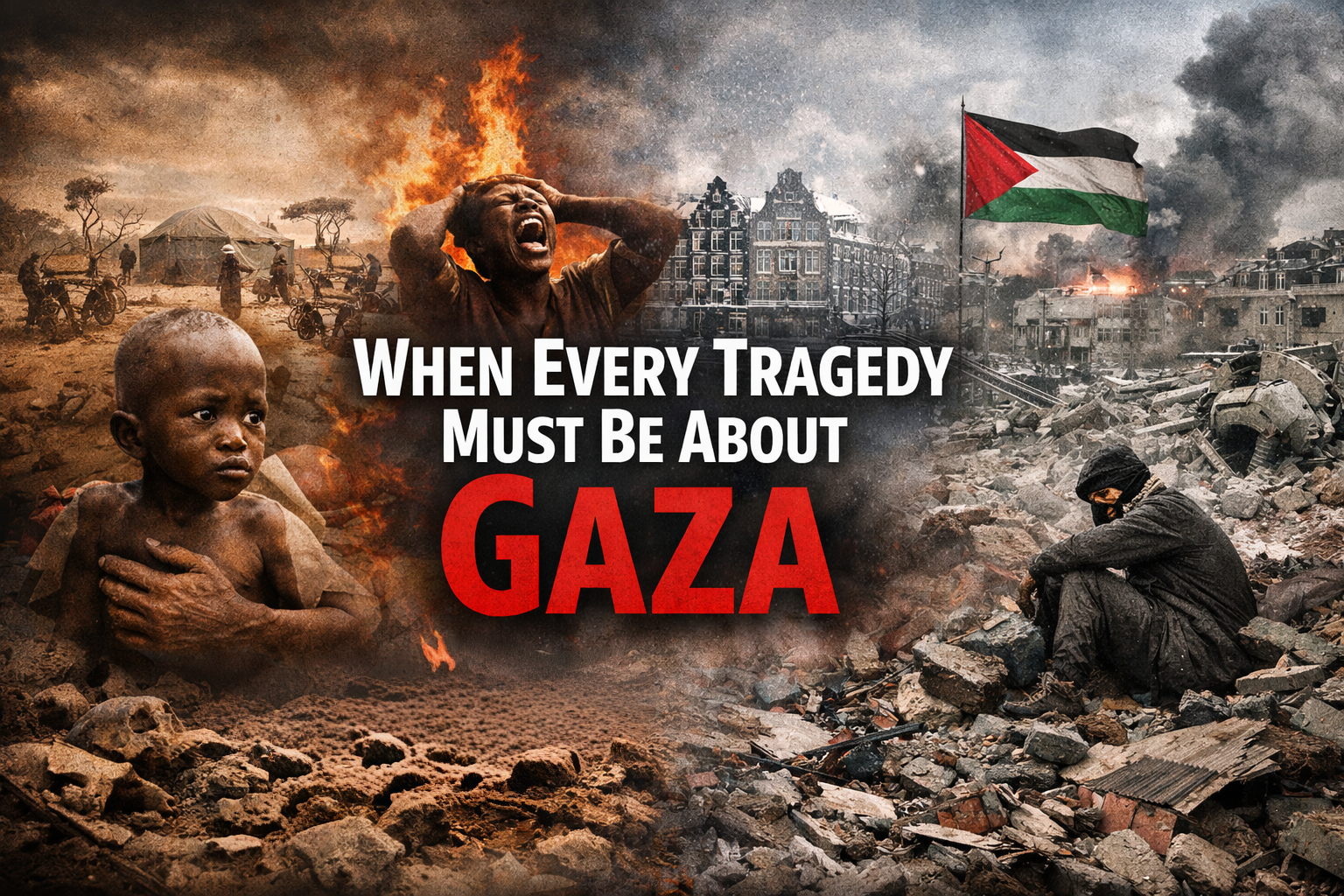
There is a pattern that has become impossible to ignore. Wherever suffering appears in the world, it is almost instantly redirected into one single storyline. A famine strikes parts of Africa and the response quickly follows that Gaza has it worse. A genocide is remembered in Rwanda and the comparison is made again that nothing compares to Gaza. Severe weather hits Europe, people lose power, homes are damaged, and once more the reaction appears that at least they are not in Gaza.
This is not empathy. It is appropriation.
Instead of allowing each tragedy to exist on its own terms, every crisis is absorbed into one dominant narrative. Other victims are not acknowledged for who they are or what they have endured. Their suffering is reduced to a benchmark, useful only if it can elevate another cause. Pain becomes a competition rather than a human experience deserving respect.
What makes this behavior especially troubling is that it does not stop with present day events. History itself is constantly reshaped. Jewish identity, heritage, and historical continuity are questioned or dismissed. Documented facts are labeled propaganda. Even unrelated disasters are folded into a single political storyline, as if the world exists primarily to validate one collective grievance.
There is a psychological dimension to this pattern. When a group is unable to recognize any reality beyond its own sense of victimhood and feels compelled to center every event around itself, it reflects narcissistic behavior. It leaves no room for others and no space for shared humanity.
When this mindset escalates further and turns into open calls for violence or the elimination of Jews, it crosses an unmistakable moral boundary. Language that promotes destruction is not resistance and it is not justice. It is dehumanization.
The claim of moral superiority rings hollow when genuine compassion is absent. True solidarity does not silence other victims. It does not hijack unrelated tragedies. It does not require constant comparison to remain relevant. Compassion recognizes suffering without needing to dominate it.
The world is vast and human pain is not limited. Recognizing one injustice does not require absorbing all others into it. Multiple truths can exist at the same time.
When every famine, every war, and every disaster must be reframed to serve a single narrative, the issue is no longer political. It is psychological. And it reveals not strength, but insecurity. A story that cannot stand on its own and must constantly feed on the suffering of others is not a movement for justice. It is a mirror of its own fragility.