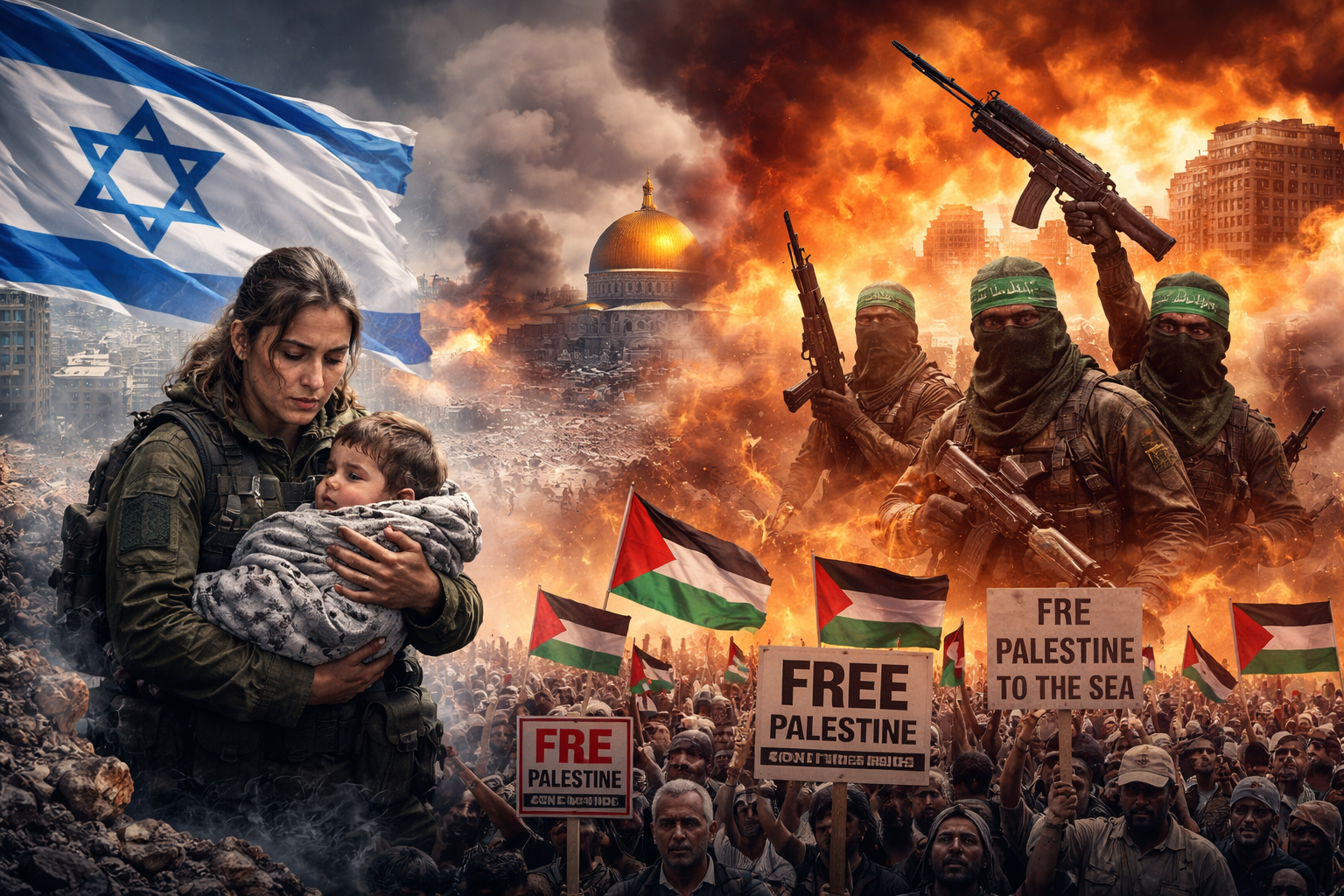
The Lie the World Wants to Believe
The guns may be quieter in Gaza, but something far uglier has only grown louder. Across social media, in protests, in universities, and even in mainstream discourse, the hatred directed at Israel has not faded with the fighting. It has metastasized. And what makes it truly disturbing is not just its intensity, but its detachment from reality.
Israel is accused, almost reflexively, of targeting children, of acting with cruelty, of waging war without restraint. These accusations spread faster than facts, repeated so often that they become accepted as truth. Yet the reality is far more complicated, and far less convenient for those who prefer simple narratives. Israel invests enormous effort in minimizing civilian casualties, often at significant military cost. It warns civilians, delays operations, and even provides medical treatment to children from hostile territories. That does not fit the caricature of a bloodthirsty aggressor, so it is ignored.
What has changed in recent years is not just the criticism of Israel, but the nature of the reaction to Jewish suffering. When images surface of Jewish families attacked or children pulled from rubble, the responses online are not sympathy or outrage, they are mockery, celebration, or justification. That is not political criticism. That is something darker.
And that darkness reveals a truth many are unwilling to confront.
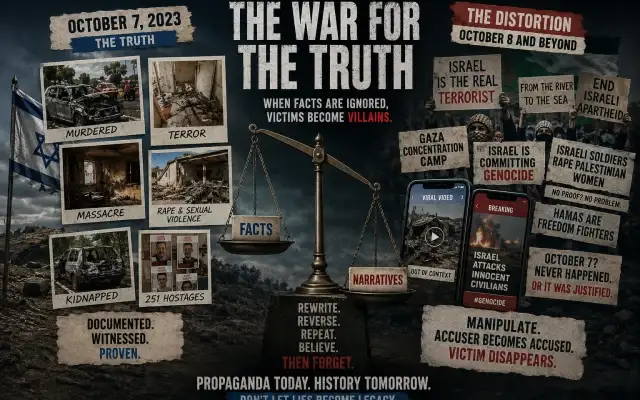
For a growing number of people, this conflict is no longer about borders, policies, or even Palestinians. It has become something ideological, almost tribal. The suffering of one side is amplified, the suffering of the other dismissed or even applauded. That selective empathy is not compassion. It is bias dressed up as morality. Part of the problem lies in how the conflict is presented and consumed. Images without context, claims without verification, narratives built in real time and spread globally within minutes. In this environment, perception often matters more than reality. A single viral clip can outweigh hours of documented evidence. And once a story takes hold, corrections rarely catch up.
This is not accidental. Information has become a battlefield, and it is one where emotional impact often trumps factual accuracy. Stories that fit preconceived beliefs spread easily. Stories that challenge them are resisted.
Israel, as a democratic state with a functioning military and media apparatus, is expected to provide evidence, justification, and transparency. Its adversaries, operating without the same constraints, are not held to that standard.
At the same time, there is a deeper cultural misunderstanding at play. Western societies tend to interpret conflicts through their own moral frameworks, assuming that all parties share the same values and priorities. They expect negotiations, compromise, and a mutual desire to preserve life above all else. But that assumption does not always hold.
In Gaza, militant groups have repeatedly embedded themselves within civilian infrastructure, turning homes, schools, and hospitals into military assets. This is not speculation; it has been documented by multiple sources. The strategic logic is clear, even if it is uncomfortable to acknowledge. Civilian casualties, when they occur, are not just tragic consequences. They are also powerful tools in the information war.
This creates a moral paradox. When Israel responds militarily, it is condemned for the resulting damage. When it holds back, it risks its own civilians. Either way, it loses in the court of public opinion. And that outcome is not a coincidence. It is the result of a strategy that understands how the modern world reacts to images of suffering.
Meanwhile, the internal dynamics of the societies involved are often overlooked. In many Western countries, individual life is the highest value. In other contexts, collective identity, honor, and resistance may carry equal or greater weight. These differences shape behavior in ways that outsiders struggle to interpret correctly.
None of this justifies violence against civilians. Nothing does. But ignoring these realities does not help anyone understand the conflict. It only deepens the confusion and fuels further division.
What is perhaps most troubling is the reaction of those who should know better. Educated voices, media outlets, and public figures often repeat unverified claims or present one-sided narratives. In doing so, they reinforce a distorted picture of the conflict. And once that picture is established, it becomes very difficult to challenge.
This has real consequences. It influences public opinion, shapes policy discussions, and affects how entire communities are perceived. It also emboldens those who see the conflict not as a tragedy to be resolved, but as a cause to be exploited.
There is also a personal dimension to all of this. For many people, engaging with the constant stream of outrage, hostility, and dehumanizing rhetoric takes a toll. It creates anger, frustration, and a sense of helplessness. Some choose to step back, not out of indifference, but out of self-preservation. Because constantly confronting that level of hostility is not healthy.
Yet stepping back does not change the underlying reality. The narratives continue to spread. The hostility continues to grow. And the gap between perception and reality widens.
At its core, this conflict is not just about land or politics. It is about fundamentally different ways of seeing the world. One side operates within a framework that prioritizes life, even under threat. The other includes elements that glorify sacrifice and frame death as a form of victory. That is not a symmetrical situation, no matter how often it is portrayed as one.
The international community often speaks of balance, of understanding both sides. In principle, that sounds reasonable. In practice, it can lead to false equivalence. Not all actions are equal. Not all intentions are the same. Recognizing that is not bias. It is clarity.
If there is any hope for a more honest conversation, it starts with rejecting easy narratives. It requires acknowledging uncomfortable truths, even when they challenge deeply held beliefs. It means holding all actors accountable, not just the ones that fit a preferred storyline.
Israel is not beyond criticism. No country is. But criticism grounded in distortion, selective outrage, or outright falsehood does not contribute to peace. It only entrenches division.
The world faces a choice. It can continue to embrace narratives that simplify and polarize, or it can engage with the complexity of reality, however difficult that may be. One path leads to more misunderstanding and hostility. The other, at least, offers a chance for something better.
Right now, it is not clear which path is being taken.