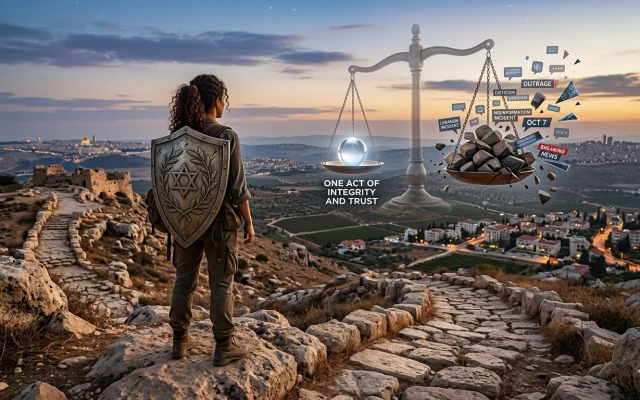
Trust is one of the most valuable things a country can possess. It takes years to build, generations to protect, and only seconds to destroy. That reality shapes how nations are viewed, how conflicts are judged, and how public opinion is formed. Few countries understand this pressure more than Israel.
For more than twelve years, I have spent countless hours defending Israel online. Every single day, I post, respond, monitor discussions, and remove hateful comments from my social media pages. Some people call it censorship, but I see it differently. The internet already has more than enough places where hatred toward Israel spreads freely like a virus. I refuse to allow my own platforms to become another breeding ground for it.
Over the years, I have shared thousands of posts supporting Israel, explaining its reality, defending its people, and countering misinformation. Yet despite all those years of effort, one mistake can erase everything in the eyes of critics. That is the exhausting reality Israel faces as well. You can act responsibly a hundred times, but the world barely notices. One error, however small, suddenly becomes international outrage.
This double standard is impossible to ignore. Israel lives under a microscope unlike any other country. Every action is analyzed, judged, and often distorted before the facts are even fully known.
A recent example was the incident in Lebanon involving an Israeli soldier who destroyed a statue of Jesus. The images spread rapidly online. Outrage exploded instantly. Many people used the moment to reinforce their existing hatred toward Israel, almost as if they had been waiting for such an incident to happen. The act itself was wrong, and there is no need to defend it. But what happened afterward matters too.
Israel did not ignore the incident. The soldier faced consequences. Criminal charges were announced, and the statue would be restored. Accountability existed. Yet those details rarely receive the same level of attention as the original mistake. The damage is already done before the correction ever arrives.
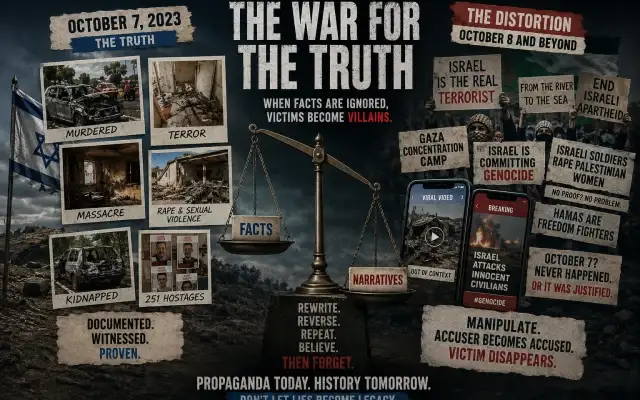
That imbalance becomes mentally exhausting after years of advocacy. Sometimes it feels impossible to fight against narratives that spread faster than facts. I have seen innocent images twisted into propaganda countless times. For years, I warned about small things that could easily be taken out of context. A simple photograph of children visiting a military base during an open day can suddenly be used online as “proof” that Israeli children are being militarized. The truth disappears. Context disappears. Nuance disappears. What remains is the simplified anti-Israel narrative that many people are eager to believe.
This concern also existed during the protests against Benjamin Netanyahu. Protesting is part of democracy, and Israel’s democracy is one of its greatest strengths. But from the beginning, I worried that internal division at such a dangerous time could weaken the country. Israel’s enemies watch closely for moments of instability. They pay attention when focus shifts inward and society becomes divided.
Then came October 7.
The consequences were devastating, and many Israelis were left asking difficult questions afterward. Could more unity have helped? Could vulnerabilities have been avoided? These are painful questions without simple answers. But one thing became painfully clear: trust, unity, and national focus are not luxuries for Israel. They are necessities for survival.
Today, trust feels more important than ever before.
Israel and the United States appear to be approaching a historic crossroads regarding Iran. The region feels increasingly unstable, and the possibility of a larger regional conflict no longer seems impossible. Gulf states have reportedly warned Iran and signaled that they could support action against it if tensions escalate further. On paper, the strategic alliances in the Middle East appear stronger than ever.
But can trust truly develop so quickly in a region shaped by decades of hostility?
Since the Abraham Accords, relations between Israel and several Arab countries have improved dramatically. Many Israelis see this as a historic breakthrough and genuine progress toward peace. Economically, diplomatically, and strategically, cooperation has grown in ways that once seemed unimaginable.
Still, part of me remains anxious.
Trust takes years to build. History in the Middle East teaches people to be cautious. What happens if alliances shift? What happens if political interests suddenly change? What if Israel places trust too quickly in countries that were once open enemies?
Maybe I am overthinking it. Maybe I am too cautious. But I cannot ignore the feeling that trust in this region has always been fragile.
At the same time, most Israelis remain remarkably optimistic. That resilience is one of the things I admire most about Israeli society. Even during uncertainty, many people still choose to see the glass half full rather than half empty. They continue building, living, innovating, and hoping for a better future despite constant threats and pressure from all sides.
Perhaps that optimism is exactly what keeps Israel strong.
In the end, this is not about blaming anyone or spreading fear. It comes from a genuine place of concern, honesty, and love for the country. Israelis must understand that every action matters because the world is always watching. A single moment can shape international perception overnight.
That may not always be fair, but it is the reality.
Trust is fragile. It can unite nations, strengthen alliances, and create peace. But once broken, rebuilding it can take years.
For Israel, that burden is heavier than most countries will ever understand.
And yet despite everything, Israelis continue forward with hope.
So let us hope this path works out, even with limited means, because in times like these, trust may be the most important weapon of all.