How Social Media, Prejudice and Narrative Warfare Shape Views on Israel
One of the strangest phenomena of the Israel-Palestine conflict is not happening in the Middle East at all. It is happening thousands of kilometers away, on phones and screens, among people who have never been to the region, never spoken to an Israeli or a Palestinian, never shared a meal with a Jew or a Muslim, yet speak with absolute certainty about who is right, who is evil, and who should disappear.
This confidence does not come from knowledge. It comes from narratives.
The illusion of expertise
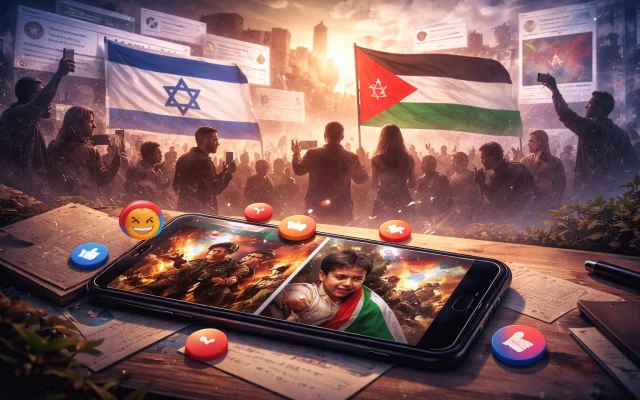
Social media has erased the difference between experience and opinion. A 30-second video, a slogan, a filtered image, or an emotionally charged post can create the illusion of understanding a conflict that spans thousands of years, multiple empires, religions, wars, peace offers, and failed compromises.
Algorithms do not reward accuracy. They reward outrage. The more simplified the story, the more shareable it becomes. Israel becomes a caricature. Jews become a symbol rather than a people. Palestinians become a single identity rather than millions of individuals with different views, histories, and political positions.
People who would never dare to lecture a surgeon about medicine or a pilot about flying suddenly feel qualified to pass moral judgment on a conflict they encountered last week on Instagram.
Prejudice dressed as activism
For many, their opinion is not built from facts but from pre-existing beliefs. Antisemitism did not disappear after World War Two. It adapted. Today, it often hides behind the language of human rights, decolonization, or social justice.
Old tropes return in new forms. Jews are portrayed as uniquely evil, uniquely powerful, uniquely manipulative. Israel is judged by standards applied to no other nation. Jewish history is minimized or erased, while Jewish self-defense is reframed as aggression.
This is not criticism of Israeli policy. Legitimate criticism exists and always has. This is something else. It is the resurfacing of ancient prejudice, updated for a digital age.
The weaponization of victimhood
The modern media ecosystem favors the simplest moral framework. One side must be pure victim, the other pure oppressor. Reality does not work that way, but social media demands it.
Images of suffering are detached from context. Timelines disappear. Responsibility becomes one sided. Terrorism is reframed as resistance. Intent is ignored, outcome is everything.
This environment is fertile ground for manipulation, intentional or not.
Narrative strategies and selective truth
In conflicts, all sides use messaging. That is not new. What is new is how selectively information is presented and how quickly it spreads.
Within parts of the Arab world and its supporters, there is an open discussion about strategic communication. One concept that is often referenced in Western debates is taqiyya, traditionally a religious principle about concealing belief under threat. In modern political discourse, it is frequently expanded beyond its original meaning and used as a tool in information warfare discussions.
It is important to be precise here. This does not mean all Arabs or all Muslims lie. That claim would be false and unfair. But it would also be naïve to deny that narrative management, selective storytelling, and strategic omission are actively taught and used in political activism related to this conflict.
Simplified messages are tailored for Western audiences. Language is chosen carefully. Certain facts are emphasized while others are erased. History is flattened into a single starting point that conveniently avoids earlier wars, rejected peace offers, and regional aggression.
This is not unique to Arabs. It is a tactic used globally. But in the Israel-Palestine debate, it has been extraordinarily effective.
AI as an echo chamber
Artificial intelligence does not correct this problem. It often amplifies it.
AI systems learn from existing data. When misinformation, bias, or one-sided narratives dominate online spaces, AI reflects that imbalance. Confidence replaces caution. Repetition creates perceived truth.
If a lie is shared often enough, it becomes part of the dataset.
The danger of moral certainty
The most alarming aspect is not disagreement. It is moral absolutism.
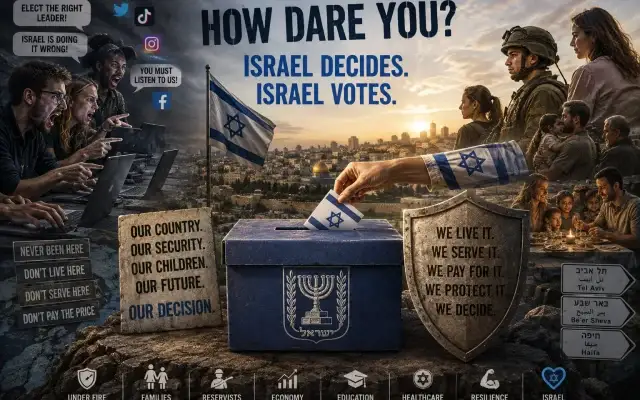
People who have never lived with rockets, bomb shelters, or mandatory military service declare what Israelis should accept. People who have never experienced Jewish vulnerability decide what antisemitism looks like. Complexity is dismissed as propaganda. Nuance is treated as guilt.
History is no longer studied. It is recruited.
Choosing responsibility over rage
The Israel-Palestine conflict deserves seriousness, humility, and historical literacy. It demands listening to people on all sides, especially those who actually live there.
Opinion without effort is not solidarity. It is performance.
If we truly care about peace, justice, or human dignity, we must resist the comfort of simple stories and the dopamine rush of outrage. Facts are slower. Truth is inconvenient. But without them, we are not advocating. We are just repeating narratives chosen for us.
And history, when distorted often enough, does not stay distorted. It turns into policy, pressure, and eventually violence.
The question is not whether people have the right to an opinion.
The question is whether they have earned it.