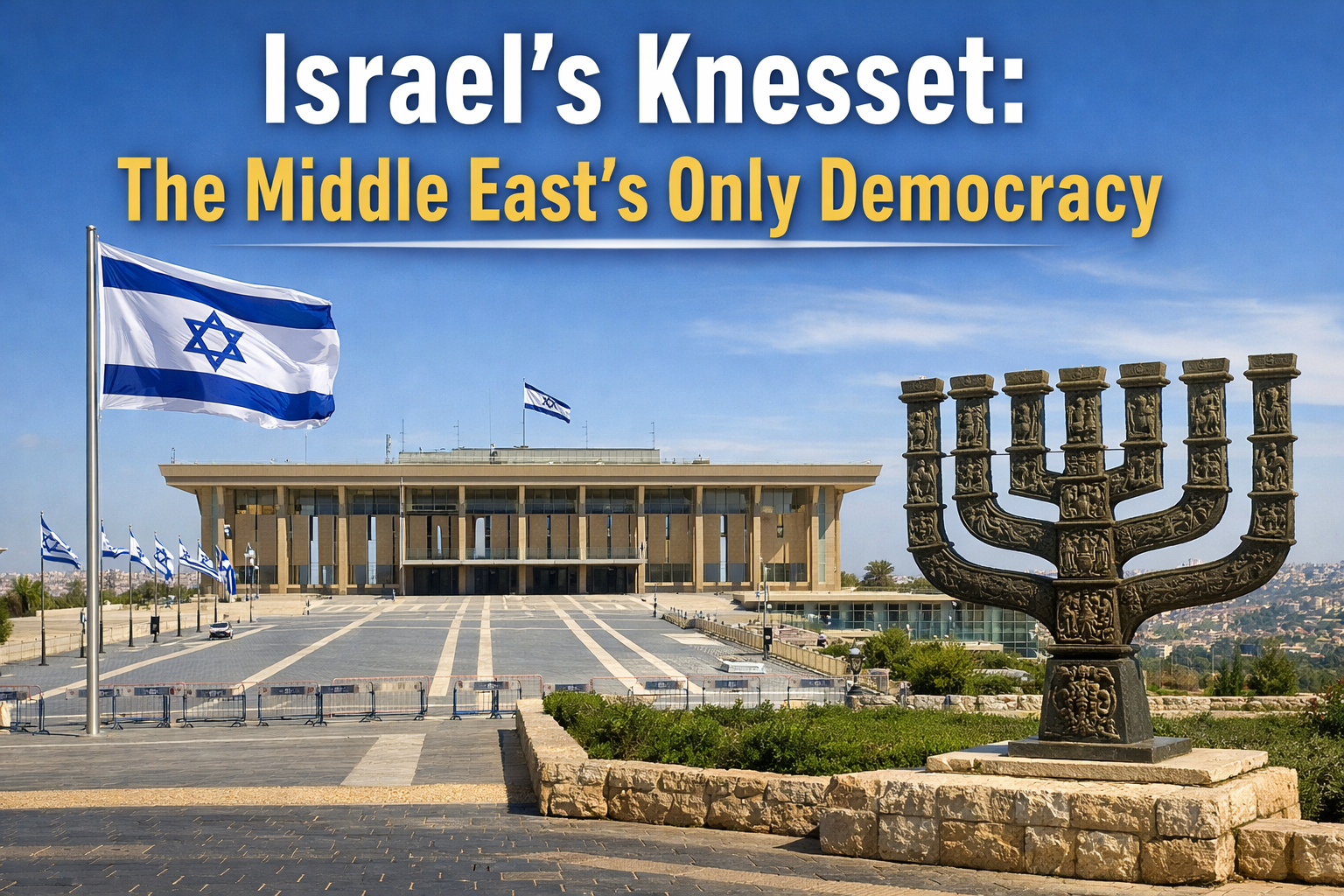
Israel’s Knesset: Democracy in the Middle East
Israel is often criticized in international debates, yet one of the most important facts about the country is frequently ignored. Israel is a functioning parliamentary democracy with a vibrant political system, free elections, an independent judiciary, and a diverse political landscape. At the center of this democratic system stands the Israeli Knesset, the national parliament of the State of Israel.
The Knesset is the legislative branch of the Israeli government. It has 120 members, a number inspired by the ancient Great Assembly that governed Jewish life more than two thousand years ago. Members of the Knesset are elected through national elections that take place at least every four years. These elections are free, competitive, and open to all Israeli citizens over the age of eighteen, regardless of religion, ethnicity, or gender.
Israel uses a system of proportional representation. This means that citizens vote for political parties rather than individual candidates in geographic districts. Each party presents a ranked list of candidates before the election. After the votes are counted, seats in the Knesset are distributed proportionally based on the percentage of votes each party receives nationwide. A minimum electoral threshold must be passed for a party to enter parliament. Currently this threshold is 3.25 percent of the national vote.
Because of this system, Israel has a multiparty political landscape. It is common to see ten or more parties represented in the Knesset at the same time. These parties represent a wide range of views, including conservative, liberal, socialist, religious, secular, Arab, Jewish, nationalist, and environmental positions. Israeli Arab citizens also vote and have their own parties represented in parliament, and Arab members of the Knesset regularly participate in debates and legislative processes.
After the election, the President of Israel consults with the leaders of the various parties in the Knesset. Based on these consultations, the president assigns the task of forming a government to the member of Knesset who appears most capable of assembling a coalition that commands a majority of seats. Since no single party has ever won a majority of the 120 seats, coalition governments are the norm in Israel.
The leader who successfully builds a coalition of at least 61 members becomes the Prime Minister. The coalition partners sign agreements outlining their shared policy priorities and how ministerial positions will be divided. Once the coalition is formed, the new government must receive a vote of confidence in the Knesset. If it loses the support of the parliamentary majority, the government can fall and new elections may be called.
This system reflects a key principle of parliamentary democracy. Power depends on the support of elected representatives, and governments remain accountable to parliament. Political debate in Israel is often loud, passionate, and highly visible, but that is exactly what democratic politics looks like.
Israel’s democratic framework includes more than elections. The country has an independent Supreme Court, a free press, active civil society organizations, and regular political competition. Citizens protest, organize campaigns, and openly criticize their leaders. Governments change through elections rather than violence. These are fundamental characteristics of a democratic society.
When comparing this system to the Palestinian Authority, the differences are striking. The Palestinian Authority was created in the 1990s as an interim administrative body following the Oslo Accords. In theory it was supposed to develop democratic institutions. In practice, democratic governance has largely disappeared.
The last Palestinian presidential election was held in 2005, when Mahmoud Abbas was elected to a four year term. Nearly two decades later he still holds the position without new elections. Parliamentary elections for the Palestinian Legislative Council were last held in 2006. Since then the parliament has effectively ceased functioning. Political divisions between Fatah in the West Bank and Hamas in Gaza have further weakened any democratic framework.
Freedom of expression within Palestinian Authority controlled areas is heavily restricted. Political opponents, journalists, and activists have been detained or intimidated. In Gaza, where Hamas rules, the situation is even more severe. Hamas is an Islamist militant organization that seized control of the territory in 2007 and does not allow democratic elections.
The contrast between Israel and the Palestinian Authority therefore highlights a fundamental reality. Israel operates as a pluralistic democracy where governments are formed and replaced through elections and parliamentary processes. The Palestinian Authority has not held national elections in many years and is governed by entrenched leadership structures without regular democratic accountability.
Israel’s democratic system is also unique within the Middle East. Most countries in the region are monarchies or authoritarian republics. Nations such as Saudi Arabia, Iran, Syria, and Qatar do not have fully competitive national elections with multiple parties and open political competition.
The only country in the Middle East that resembles Israel’s parliamentary democratic model is Lebanon, which also has a multi party parliamentary system. However, Lebanon’s political structure is heavily constrained by sectarian power sharing and has struggled with instability for decades.
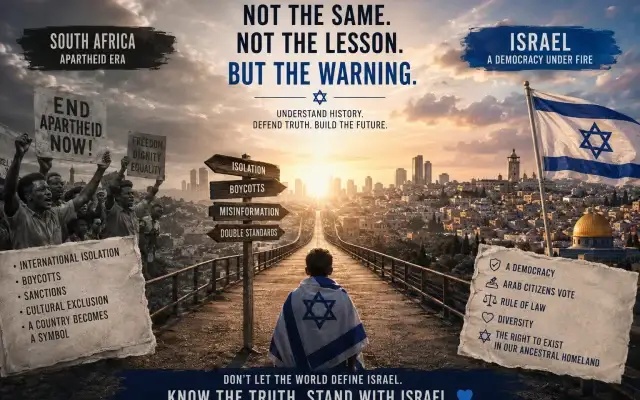
This makes Israel stand out in the region. It is a country where Jewish, Muslim, Christian, and Druze citizens all participate in elections. Political parties compete openly, governments rise and fall through parliamentary votes, and public debate remains intense and free.
Understanding the role of the Knesset and Israel’s democratic institutions is essential for anyone who wants to evaluate the country honestly. Despite the challenges and conflicts it faces, Israel remains one of the few places in the Middle East where democracy is not just a promise but a daily political reality.