
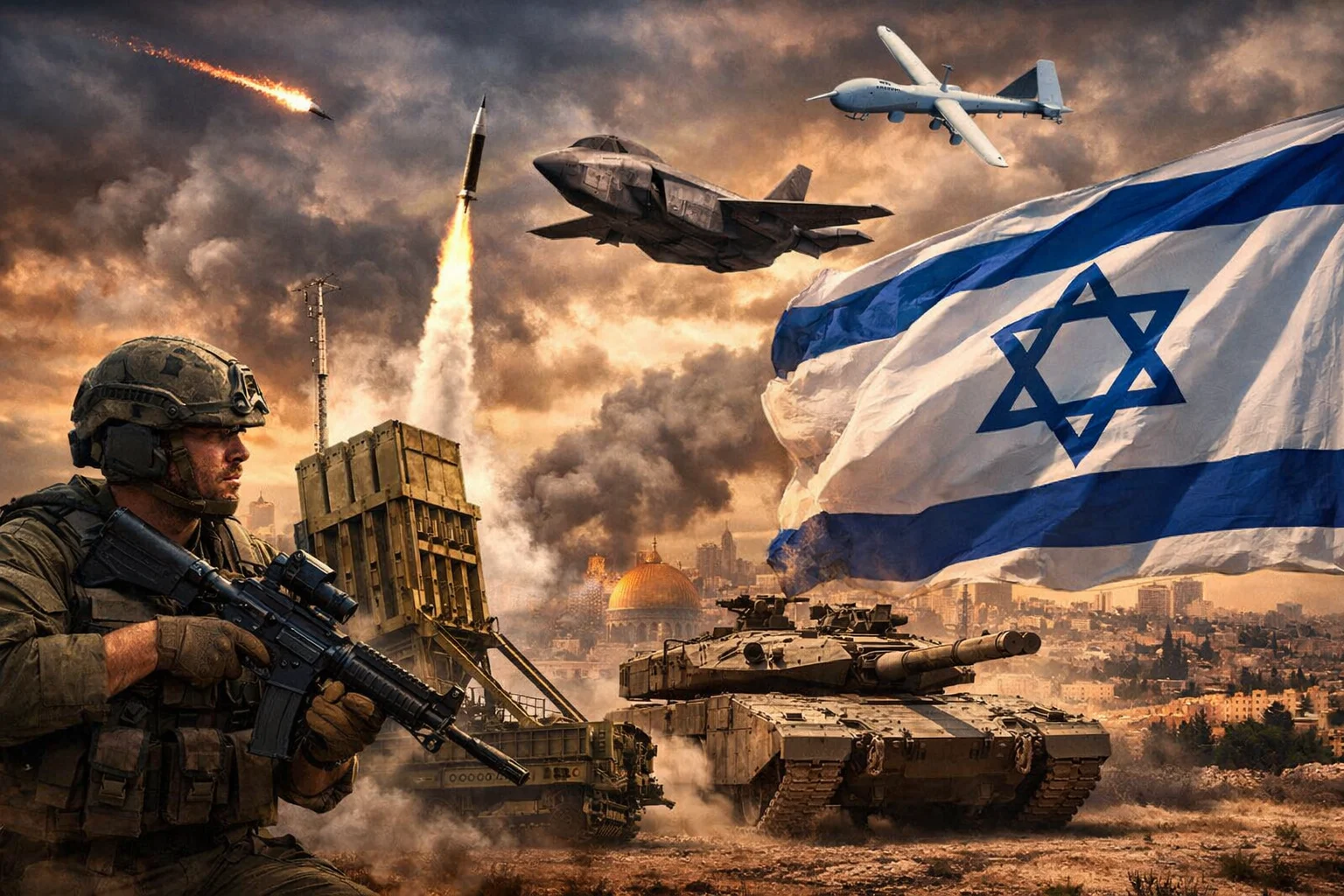
Israel Must Stand on Its Own Strength
For decades, the strategic alliance between Israel and the United States has been one of the piillars of Israel’s national security. American military aid, diplomatic backing, and technological cooperation have given Israel critical advantages in a hostile region. The relationship remains deep, institutional, and historically strong. Yet in an era of shifting global priorities and growing political polarization inside the United States itself, Israel cannot afford to assume that yesterday’s certainties will automatically define tomorrow’s realities.
This is not a statement of ingratitude. It is a statement of strategic maturity.
The United States is facing internal divisions, budgetary pressures, and a rising focus on Asia and domestic priorities. Across both American political parties there are voices questioning foreign aid commitments and overseas entanglements. Even when support for Israel remains solid at the governmental level, public opinion trends and generational shifts suggest that the political landscape is evolving. Military assistance packages that once passed with overwhelming bipartisan enthusiasm increasingly encounter debate and delay. None of this means the alliance is collapsing. It does mean that responsible Israeli leadership must plan for a world in which American backing may be less automatic, less predictable, or more conditional.
Israel has always understood this principle. The very foundation of Zionism was built on Jewish self determination, not dependency. From the early days of the state, Israel developed domestic arms production precisely because international embargoes threatened its survival. The lesson of history is clear. Allies are important. Self reliance is essential.
Today Israel possesses one of the most advanced defense industries in the world. Missile defense systems such as Iron Dome, David’s Sling, and Arrow were developed domestically. Israeli drones dominate global markets. Cyber capabilities, armored vehicle upgrades, radar systems, and precision weapons are largely homegrown. This is not a minor achievement. It is the product of decades of investment, innovation, and necessity.
Yet gaps remain. Israel does not manufacture its own fifth generation fighter jets. It relies on American platforms such as the F 35 and F 15. Certain categories of heavy munitions and advanced components are still imported. Funding structures tied to foreign military assistance create dependencies that can translate into leverage.
If Washington’s reliability were ever to waver, even partially, Israel would feel the consequences in its air force and strategic depth. That reality alone demands diversification.
Israel has already expanded cooperation with Europe, India, and various Asian partners. Defense exports to countries in the Abraham Accords framework have opened new regional opportunities. Quiet technological collaboration with states that share concerns about Iran is increasing. This diversification is wise and necessary. It strengthens diplomatic flexibility and reduces overconcentration of risk.
But could Russia serve as a viable alternative ally?
The short answer is no.
Russia operates in Syria in close proximity to Israeli operations, and there has been a deconfliction mechanism to prevent direct clashes. However, Russia is also strategically aligned with Iran, Israel’s primary existential threat. Moscow supplies advanced weaponry to Tehran and coordinates with Iranian forces on Syrian soil. Russia’s global posture is defined by confrontation with the West, sanctions, and unpredictable strategic calculations.
An alliance requires shared values and aligned long term interests. Israel is a democratic state integrated into Western economic and technological systems. Russia is not. Israel depends heavily on Western markets, supply chains, and financial networks. Deep alignment with Moscow would jeopardize Israel’s relations with Europe and North America, its primary trade partners and innovation ecosystems.
Moreover, Russia’s own military industrial base is under strain due to prolonged conflict and sanctions. It is not in a position to replace American technological depth or financial capacity. A pivot toward Russia would introduce more risk than security.
The conclusion is unavoidable. Israel’s future security cannot rest on replacing one great power patron with another. It must rest on Israeli strength.
That means accelerating domestic production of critical munitions. It means investing heavily in independent aerospace capabilities, including advanced aircraft subsystems and eventually indigenous platforms. It means securing raw material supply chains and expanding manufacturing capacity so that wartime shortages never again depend on foreign political timetables. It also means maintaining strong alliances while making clear that Israel’s survival is not negotiable.
The Jewish state was born in a world that doubted its ability to endure. It survived because it refused to outsource its destiny. Cooperation with allies is wise. Gratitude is honorable. Dependence is dangerous.
The world is entering a period of volatility in which alliances shift and superpowers recalibrate. Israel must respond not with anxiety but with determination. Total self sufficiency in core defense capabilities is not a luxury. It is an urgent strategic imperative.
In the end, the strongest message Israel can send to friend and foe alike is simple. We welcome partnership. We appreciate support. But the defense of the Jewish state rests first and foremost in Jewish hands.