For decades, Israel and Iran were not enemies. Under the Shah, Iran and Israel maintained quiet but meaningful ties. They cooperated in trade, intelligence, and regional security. Both were non Arab states navigating a hostile regional environment. That reality changed dramatically in 1979 with the revolution that brought the Islamic Republic to power. Since then, hostility toward Israel has not been a side issue of Tehran’s ideology. It has been central to it.
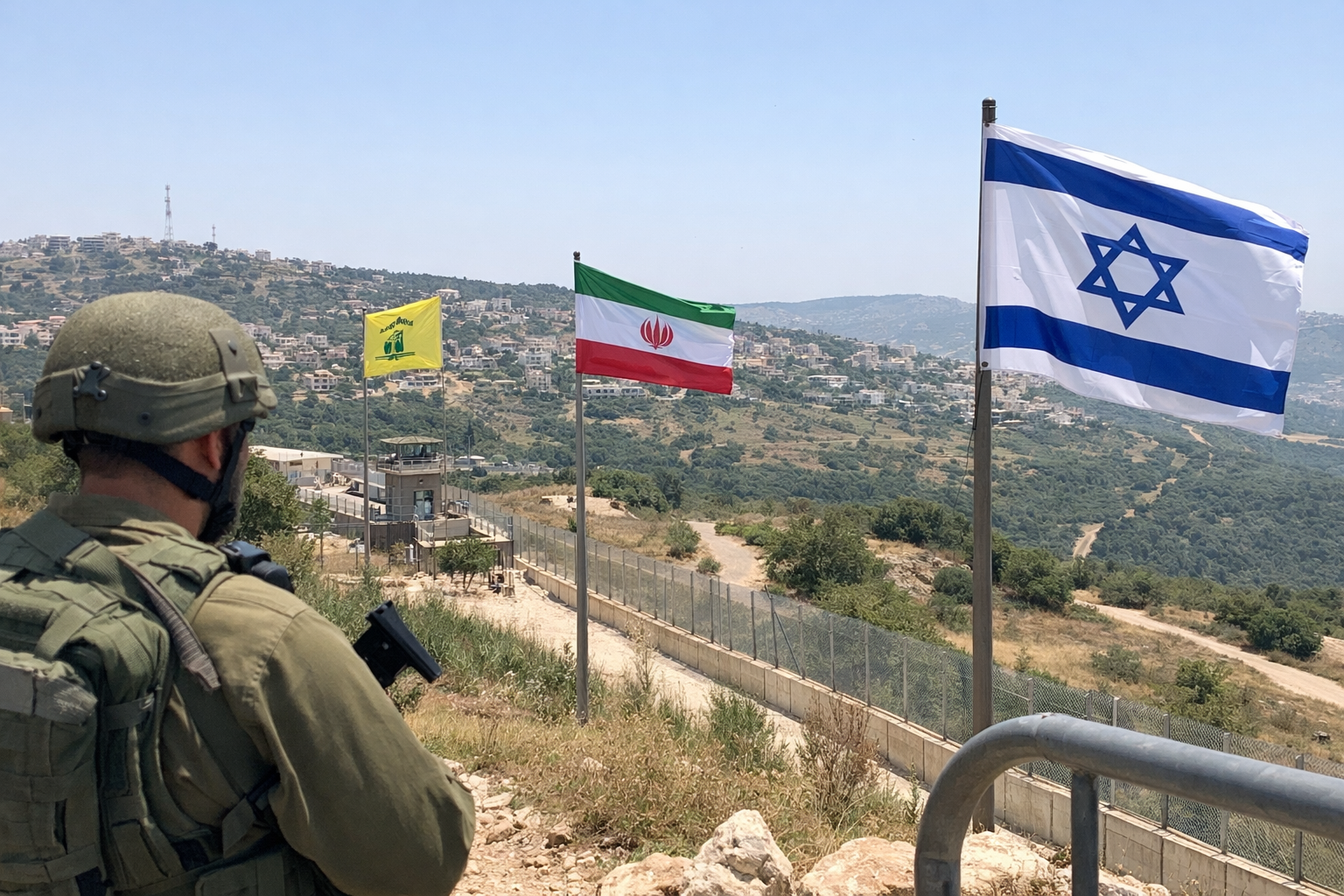
The regime institutionalized the destruction of Israel as a strategic objective. Through the Revolutionary Guard and its Quds Force, Iran built a ring of armed proxies around the Jewish state. Hezbollah in Lebanon became the most heavily armed non-state actor in the world, with an arsenal of rockets aimed at Israeli cities. In Gaza, Iran funds and equips Hamas, helping them expand their missile capabilities. In Syria, Iranian forces and militias entrenched themselves militarily to open another front against Israel. In Yemen, Tehran backs the Houthis, destabilizing shipping lanes and threatening Gulf states.
This strategy is not defensive. It is expansionist. Iran exports revolution, arms militias, and fuels sectarian conflict from Lebanon to Iraq to Yemen. The result is a Middle East marked by proxy wars, political paralysis, economic collapse, and humanitarian disaster. Lebanon’s sovereignty has been hollowed out by Hezbollah’s dominance. Syria has been devastated by war. Yemen faces ongoing instability fueled in part by external interference. Iraq struggles under the weight of militia influence tied to Tehran.
For Israel, the threat is immediate and existential. No other state in the region openly calls for its destruction while actively building the military infrastructure to pursue that goal. Iranian leaders have repeatedly declared that Israel should cease to exist, while simultaneously financing the armed groups positioned on its borders. A regime change in Tehran would not simply reduce rhetoric. It would fundamentally alter the security architecture surrounding Israel.
A post-regime Iran that prioritizes national development over ideological expansion would likely scale back support for foreign militias. Without Iranian funding, advanced weaponry, and training, groups like Hezbollah and Hamas would be significantly weakened. Their ability to sustain prolonged conflict would diminish. The constant multi-front pressure on Israel would ease, lowering the risk of regional war.
But the benefits would extend far beyond Israel.
The Iranian people themselves have repeatedly demonstrated dissatisfaction with the ruling clerical establishment. Protests over economic hardship, corruption, and repression have erupted in recent years. Iran is a country with immense human capital, natural resources, and cultural depth. Freed from revolutionary ideology and sanctions driven by its aggressive policies, Iran could reintegrate into the global economy. Investment, trade, and regional cooperation could replace isolation and confrontation.
The broader Middle East would also stand to gain. Gulf states would face fewer missile and drone threats. Lebanon could begin rebuilding true sovereignty. Iraq could strengthen its national institutions without militia dominance. Maritime trade routes through the Red Sea and the Gulf would be more secure. The cycle of proxy escalation that repeatedly drags the region toward wider war could finally be broken.
Israel has already demonstrated through the Abraham Accords that cooperation between former adversaries is possible when ideological extremism recedes. A different Iran, one focused on prosperity rather than revolution, could one day be part of a regional framework built on mutual recognition and economic partnership instead of annihilationist doctrine.
This is not about revenge or domination. It is about stability. The current Iranian regime has made hostility toward Israel and destabilization of its neighbors a pillar of its identity. Removing that pillar would not magically solve every regional conflict. But it would remove one of the most persistent engines driving them.
History shows that Israel and Iran were not destined to be enemies. The hostility of the past four decades is rooted in ideology, not geography or culture. A regime change in Tehran would not only enhance Israel’s security. It could unlock the potential for a Middle East less defined by proxy warfare and more defined by cooperation, development, and peace.