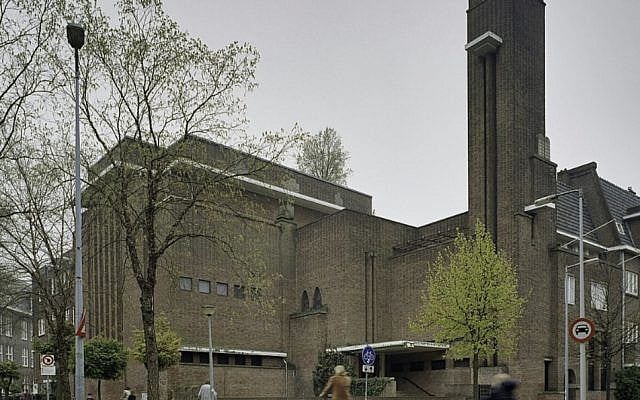
Today, in the heart of Amsterdam, the Rav Aharon Schuster Synagogue opened its doors for a solemn and emotional commemoration of October 7th, which was the darkest day in recent Israeli history.
The Rav Aharon Schuster Synagogue, located on the stately Jacob Obrechtplein, stands as one of the few active synagogues that survived the Holocaust in the Netherlands. Built in 1928, it is a symbol of Jewish perseverance and revival. During the Nazi occupation, Amsterdam’s Jewish life was almost annihilated. Yet, this synagogue still stands, not as a relic of the past, but as a living testament to the strength of faith and continuity of the Jewish people.
The ceremony was attended by the Israeli Ambassador, members of the Dutch Parliament, rabbis, advocates for Israel, and many from the Dutch Jewish community. But among them, one presence transcended politics and diplomacy — the mother of murdered hostage Guy Illouz.
Guy, a 26-year-old musician from Ra’anana, was captured by Hamas terrorists while fleeing the Supernova music festival on October 7. According to testimonies from freed hostages, he was taken wounded to Gaza and died there from lack of medical care. His body is still being held by Hamas.
Guy was not a soldier. He was a dreamer, a guitarist who worked with Israeli icons like Matti Caspi, Shalom Hanoch, and the band Hayehudim. He studied philosophy and psychology and believed in the beauty of life. Friends remember him as a man “with a huge heart,” full of joy, always wanting to make others happy.
When his mother spoke, the entire hall fell silent. Her voice trembled with pain, but not with hatred. There were no cries for revenge, no calls for blood. Instead, she spoke of her son with love, pride, and dignity, the way only a mother from Israel could. Her words carried a message that transcended grief: even in pain, Israel chooses life over death, morality over madness.
And how different this is from the other side, where Hamas and its supporters celebrate murder as victory. They film it, sing about it, and glorify it. The contrast is not political, it is moral. It is the difference between a people who sanctify life and those who sanctify death.
It was deeply moving to see Dutch and Israeli flags side by side, and both national anthems played. When Hatikva, The Hope, filled the synagogue, many cried silently. Hope that the hostages will return. Hope that peace will come through strength. Hope that the West will finally see Hamas for what it truly is: not a resistance movement, but a death cult.
I could not bring myself to sing the Dutch anthem’s old line, “I have always honored the King of Spain.” After that country’s recent embrace of Hamas rhetoric, those words felt hollow. But Hatikva, “Our Hope”, resonated deeply.
Because hope is not naïve. It is what has kept the Jewish people alive through exile, persecution, and war. It is what keeps Israelis rebuilding even as rockets fall. And it is what the world must understand: Israel does not fight out of hatred. It fights to live.
Those who attended this commemoration and still have a moral compass could not leave unchanged. You cannot witness the quiet strength of an Israeli mother who lost her son to terrorists and still speaks of peace and remain neutral.
Supporting Israel is not about politics. It is about standing with humanity, with morality, with hope itself.
And as the notes of Hatikva faded through the old synagogue’s arches, one truth echoed louder than ever:
https://www.youtube.com/shorts/MSxJCs3Ncg0?feature=share