History of the Hurva Synagogue
The Hurva Synagogue, located in the Jewish Quarter of Jerusalem’s Old City, has a dramatic history of destruction and rebirth spanning nearly 300 years. Its name, Hurva (“the Ruin”), reflects this turbulent past.
18th Century – The First Ruin
In the early 1700s, Rabbi Yehuda HaChassid led a group of Ashkenazi Jews to Jerusalem and began building a large synagogue.
The community ran out of funds, fell into debt, and the Ottomans destroyed the unfinished structure in 1721, leaving it in ruins.
For over a century the site remained an empty, symbolic reminder of the difficulties facing Jews under Ottoman rule.
19th Century – Reconstruction and Glory
In the mid-1800s, with permission from the Ottomans and help from wealthy Jewish communities abroad, the site was rebuilt.
The new Hurva Synagogue was completed in 1864.
It quickly became the most important Ashkenazi synagogue in the Land of Israel, known for its impressive dome and its role as a center of Torah study and communal leadership.
1948 – Destruction by the Jordanian Legion
During Israel's War of Independence, the Jewish Quarter fell to the Jordanian Arab Legion.
The Jordanians blew up the Hurva Synagogue in May 1948, deliberately destroying it after conquering the Quarter.
For the next 19 years (1948–1967), under Jordanian occupation, the synagogue remained a pile of rubble, symbolizing the absence of Jews from their historic quarter.
Post-1967 – Planning and Debates
After Israel reunited Jerusalem in the Six Day War, many ideas were proposed for rebuilding the synagogue.
A symbolic arch was erected in the 1970s, but political, architectural, and religious debates delayed full construction for decades.
2010 – Rebirth
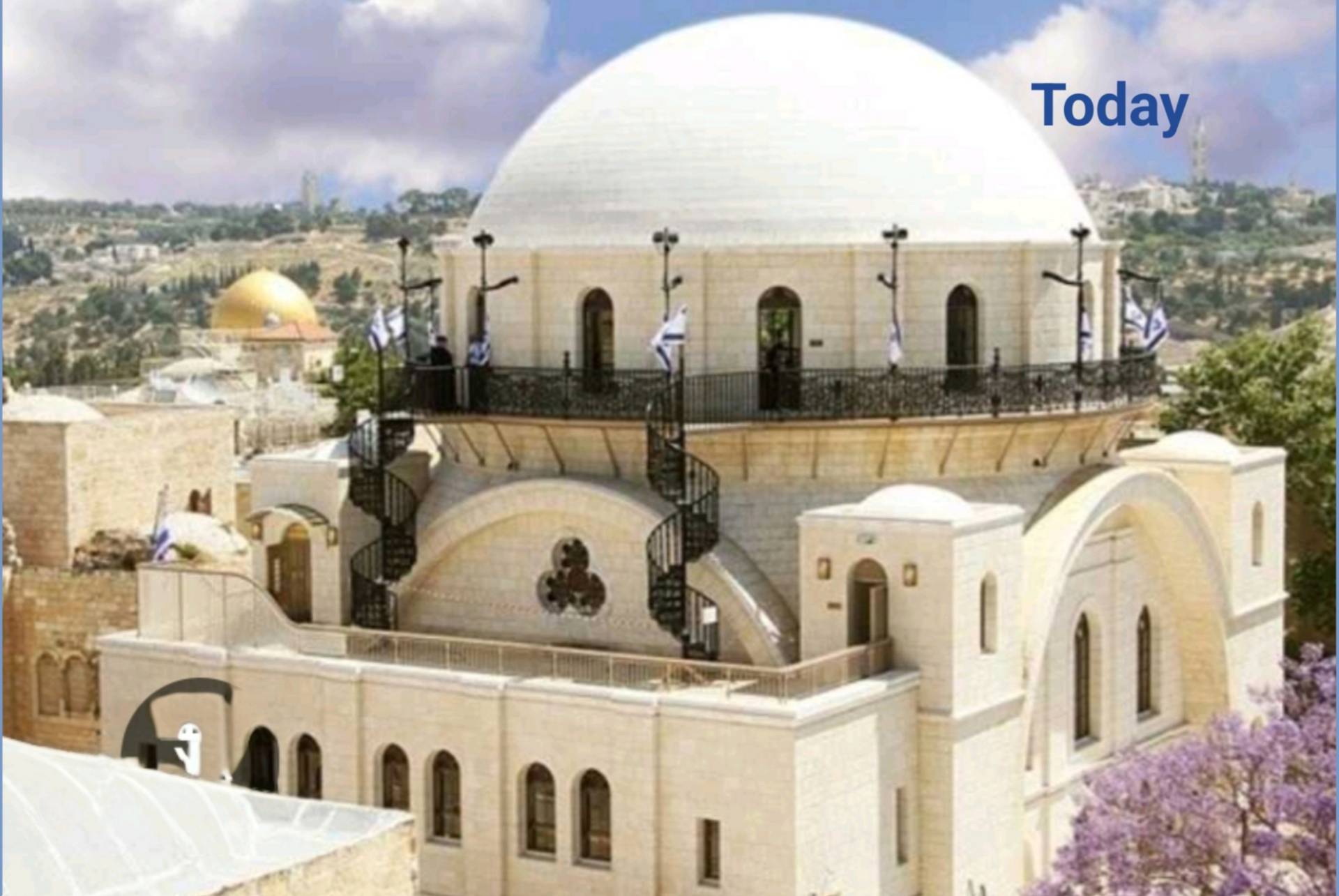
In March 2010, after a long restoration project, the Hurva Synagogue was fully rebuilt based on 19th-century designs.
The restored building stands again as a functioning synagogue, study hall, and historical monument—representing Jewish continuity and return to Jerusalem.