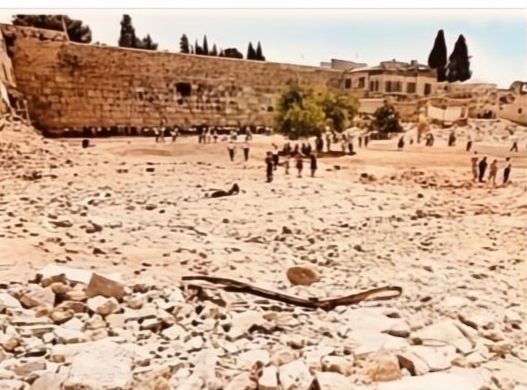
The Kotel, also known as the Western Wall, is the last remaining visible structure from the Second Jewish Temple complex in Jerusalem and the holiest accessible site in Judaism.
Biblical & Second Temple period (c. 10th century BCE – 70 CE)
The First Jewish Temple was built by King Solomon around the 10th century BCE and destroyed by the Babylonians in 586 BCE.
The Second Temple was rebuilt after the Jewish return from exile and later massively expanded by King Herod the Great (1st century BCE). The Kotel is part of the western retaining wall that supported the Temple Mount platform.
Roman destruction (70 CE)
In 70 CE, the Romans destroyed Jerusalem and the Second Temple during the Jewish revolt. The Temple itself was razed, but parts of the retaining walls—including the Kotel—remained.
Continuous Jewish connection (70 CE – modern era)
For nearly 2,000 years, Jews prayed at or near the Kotel, mourning the Temple’s destruction and expressing longing for Jerusalem. It became the central site of Jewish prayer in the absence of the Temple.
Islamic, Crusader, and Ottoman periods
Under various rulers, Jewish access fluctuated but never disappeared. During Ottoman rule (16th century onward), Jewish prayer at the Wall was formally permitted, though often restricted.
British Mandate & Jordanian control (1917–1967)
Tensions over access increased under British rule. After the 1948 war, Jordan occupied East Jerusalem, and Jews were completely barred from the Kotel for 19 years—despite armistice agreements guaranteeing access.
Since 1967
Israel regained access to the Old City during the Six-Day War. The Kotel Plaza was established, restoring free worship for Jews and access for people of all faiths.
Today, the Kotel stands as a powerful symbol of Jewish continuity, faith, and historical presence in Jerusalem, as well as a major religious and cultural site visited by millions each year.