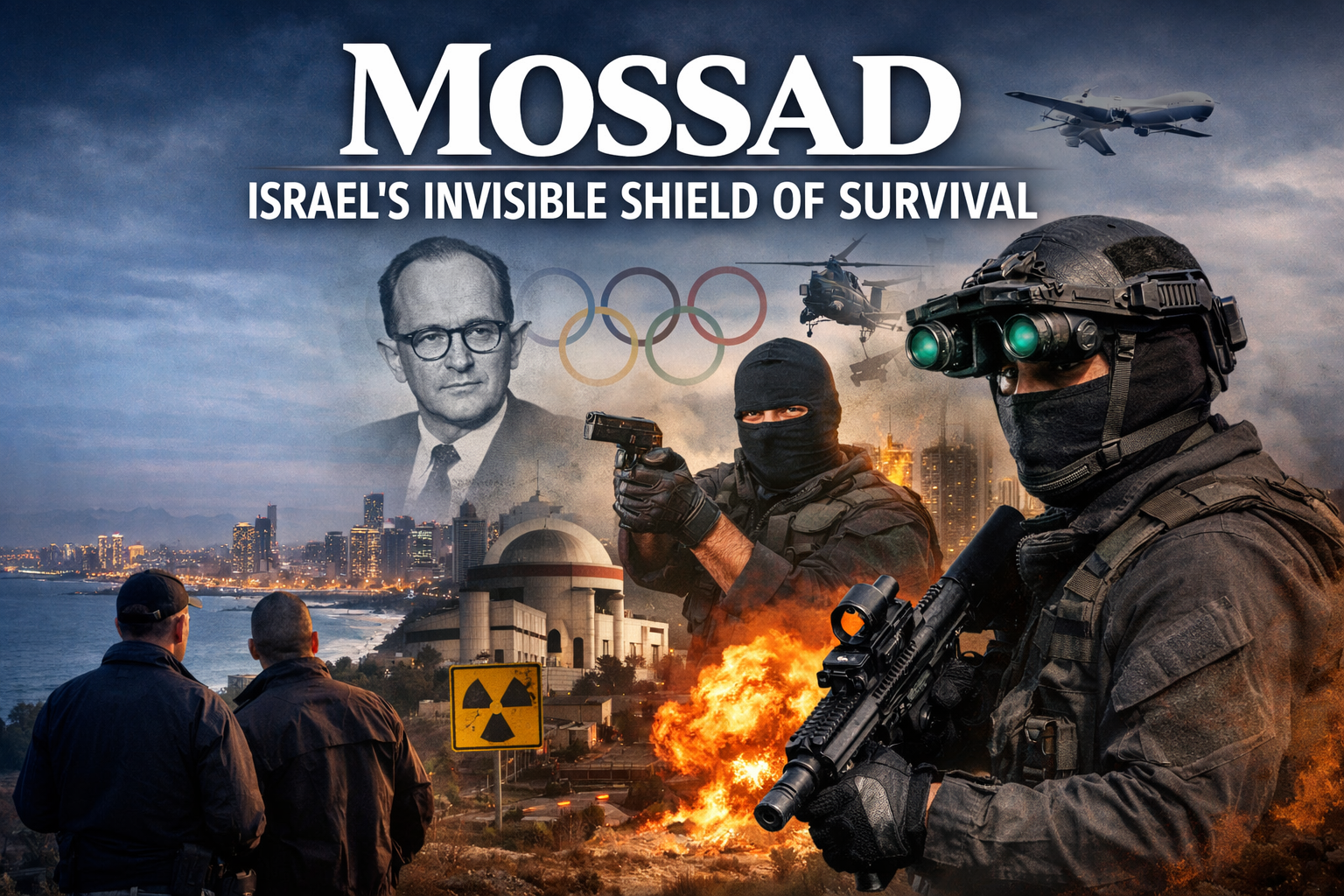
Mossad: The Shadow Guardian of Israel
Few intelligence organizations in the world evoke as much fascination, fear, admiration, and controversy as the Mossad. Officially known as HaMossad leModi’in uleTafkidim Meyuhadim , “The Institute for Intelligence and Special Operations”. Mossad is Israel’s foreign intelligence service. Since its founding, it has operated largely in secrecy, yet its actions have repeatedly altered the course of Jewish and Israeli history.
Mossad was not created for conquest or empire. It was created for survival.
The Founding of Mossad
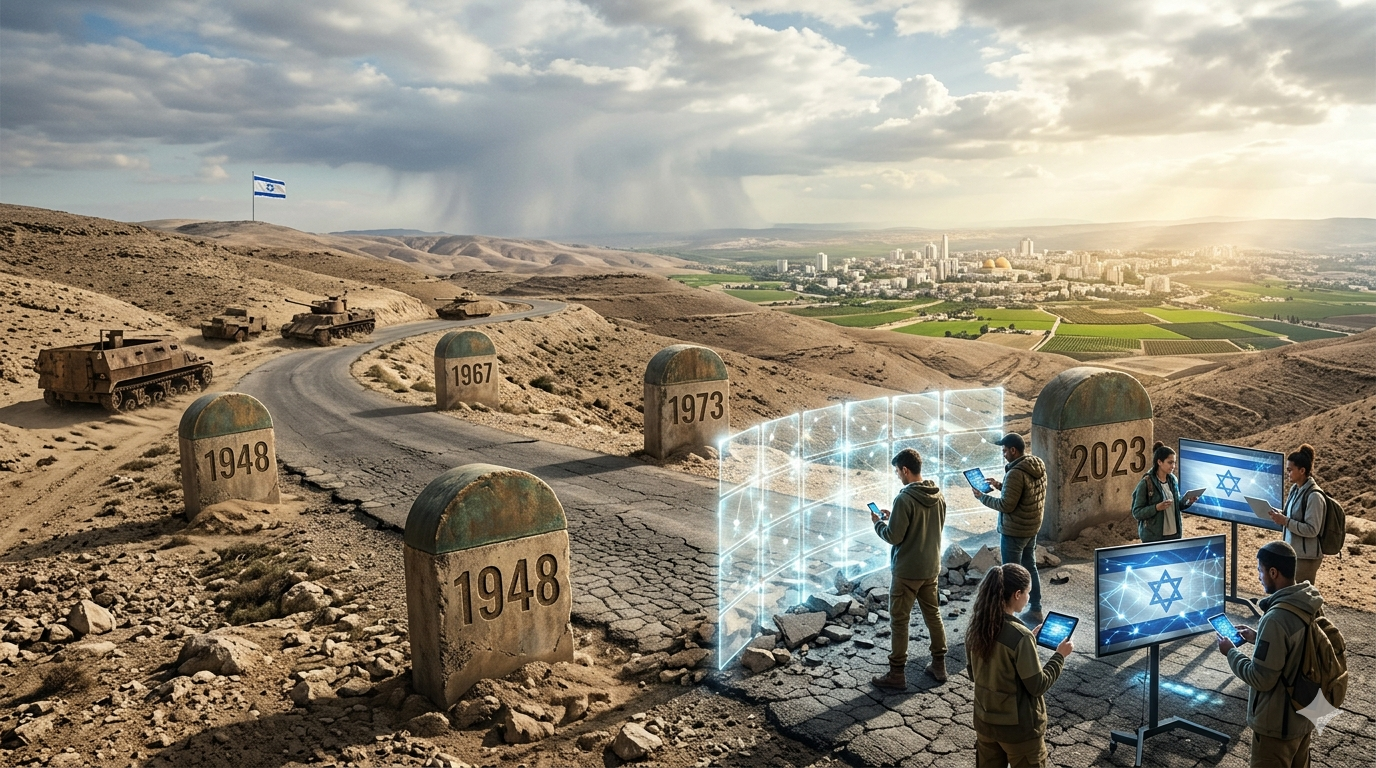
Mossad was officially founded on December 13, 1949, barely a year after the establishment of the State of Israel in 1948. The young Jewish state was surrounded by hostile enemies, had no strategic depth, and carried the fresh trauma of the Holocaust, the systematic murder of six million Jews while the world largely looked away.
Prime Minister David Ben-Gurion understood a painful truth: Israel could never afford to be blind. Intelligence failures would not mean defeat; they would mean annihilation.
Ben-Gurion appointed Reuven Shiloah as Mossad’s first director. The organization was tasked with gathering intelligence abroad, conducting covert operations, protecting Jewish communities worldwide, and ensuring that threats to Israel were neutralized often before they reached Israeli borders.
From the beginning, Mossad operated under a guiding principle that still defines it today:
“Never again.”
A Mission Beyond Borders
Unlike many intelligence agencies, Mossad’s mandate has always been global. Its agents operate far beyond Israel’s borders, often without diplomatic cover, blending into foreign societies with extraordinary skill. They are linguists, psychologists, engineers, cyber experts, and operatives trained to work alone if necessary.
But Mossad’s mission extends beyond classic espionage. It has been deeply involved in:
Rescuing Jews from hostile countries
Disrupting terrorist networks
Preventing nuclear proliferation among Israel’s enemies
Tracking and eliminating perpetrators of mass murder
The Eichmann Operation: Justice After the Holocaust
Perhaps Mossad’s most famous operation remains the capture of Adolf Eichmann, one of the chief architects of the Holocaust.
After World War II, Eichmann escaped to Argentina, living under a false identity. For years, Nazi war criminals vanished into the shadows, shielded by distance and indifference. Mossad refused to let history close that chapter without accountability.
In 1960, Mossad agents located Eichmann in Buenos Aires. After months of surveillance, they abducted him and secretly transported him to Israel aboard an El Al aircraft.
Eichmann was tried in Jerusalem in 1961. For the first time, Holocaust survivors testified before the world. The trial forced humanity to confront the machinery of genocide, not as abstraction, but as lived reality.
Eichmann was convicted and executed in 1962.
This was not vengeance. It was justice and a message: those who murder Jews will never truly escape.
Munich 1972: Terrorism and the Price of Inaction
On September 5, 1972, during the Olympic Games in Munich, Palestinian terrorists from the group Black September infiltrated the Olympic Village. They murdered two Israeli athletes and took nine others hostage. All nine were later killed.
The massacre was broadcast live to the world.
For Israel, it was not just an act of terror; it was a reminder of Jewish vulnerability on foreign soil and the failure of international security to protect Jewish lives.
In response, Prime Minister Golda Meir authorized a covert campaign to locate and neutralize those responsible for planning and supporting the massacre. The operation, often referred to as “Wrath of God,” unfolded over years.
Mossad systematically tracked down key figures linked to the attack. Some operations succeeded, others failed, and some remain classified to this day. Critics debated the ethics; supporters argued necessity.
But one truth remained unchallenged: Israel would no longer accept a world where Jewish blood could be spilled without consequence.
Mossad and Counter-Terrorism in the Modern Era
As terrorism evolved, so did Mossad.
From airline hijackings in the 1970s to suicide bombings in the 1990s and asymmetric warfare in the 21st century, Mossad has adapted continuously. It works closely with Israel’s military intelligence (Aman) and domestic security service (Shin Bet), as well as allied agencies worldwide, often quietly, without public acknowledgment.
Mossad is widely credited with disrupting countless planned attacks, dismantling terror financing networks, and providing intelligence that saved thousands of lives, Israeli and non-Israeli alike.
Iran, Technology, and the New Battlefield
In recent decades, Mossad’s focus has increasingly turned toward Iran and its regional proxies. Preventing Iran from acquiring nuclear weapons has become one of Mossad’s most critical missions.
Operations attributed to Mossad include cyber sabotage, intelligence theft, targeted disruptions of weapons programs, and psychological warfare, often without firing a single bullet.
One of the most remarkable publicly acknowledged achievements was the 2018 seizure of Iran’s nuclear archive, in which Mossad agents reportedly extracted tens of thousands of classified documents from Tehran, exposing Iran’s deception about its nuclear ambitions.
The Beeper Attacks and Psychological Warfare
In recent conflicts, reports have emerged of covert psychological and technological operations, including alleged disruptions of communication devices used by terror networks, sometimes referred to in media as “beeper” or pager incidents.
While details remain classified and attribution is often officially denied, such operations highlight Mossad’s evolving strategy: disrupt, confuse, deter, and destabilize enemy networks without mass civilian harm.
Modern intelligence warfare is no longer just about guns and bombs. It is about data, trust, communication, and fear.
Moral Complexity and Global Debate
Mossad is not without controversy. Assassinations, covert operations on foreign soil, and secrecy raise legitimate ethical and legal questions. Democracies struggle with the balance between morality and survival.
But Israel’s reality is not theoretical.
It is a nation that has faced wars, genocidal threats, and terrorism since its birth. Mossad exists because Israel learned, painfully, that relying on others for Jewish protection is a deadly gamble.
Conclusion: A Necessary Shadow
Mossad is neither a myth nor a movie fantasy. It is a human organization, composed of fallible people operating under extraordinary pressure. Its successes are silent; its failures are scrutinized.
But its purpose is clear.
Mossad stands as a warning to those who seek Israel’s destruction and a promise to Jews worldwide: you are not alone anymore.
In a world where threats often emerge in darkness, Mossad operates in the shadows …. not for glory, but for survival