
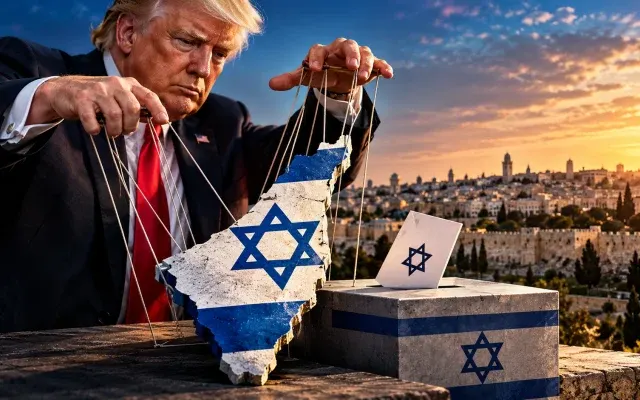
There comes a moment when gratitude must give way to principle, when admiration must be replaced by scrutiny, and when even the most powerful ally must be reminded that friendship does not confer ownership. For Israel, that moment has arrived. I have never hesitated to acknowledge the positive contributions of American President Donald Trump to the State of Israel, and I will certainly not begin by denying his important role in securing the release of the remaining living Israeli hostages from Hamas captivity in October 2025. Their return was an extraordinary moment of relief after two years of unimaginable suffering. Families were reunited, parents embraced their children, and an entire nation could finally celebrate their freedom. For that achievement, Trump deserves genuine gratitude. But gratitude is not a lifelong obligation to remain silent, and saving Israeli lives does not purchase the right to dictate Israel’s political future.
Recent reports about Donald Trump’s involvement in Israel’s internal political affairs should deeply concern every Israeli who values the sovereignty of the Jewish state. Publicly endorsing a foreign political leader is already questionable when done by the president of a powerful allied nation, but attempting to influence the political choices of another democracy goes considerably further. This is not simply an expression of diplomatic friendship. It is political interference, accompanied by language that risks turning an alliance between sovereign democracies into a relationship of personal dependence.
Let me make something absolutely clear. This is not an argument against Benjamin Netanyahu, nor is it an endorsement of his political opponents. Israelis have every right to support Netanyahu, criticize him, vote for him or remove him from office. That is precisely the point. The decision belongs to the Israeli people, not to the occupant of the White House. Israel did not survive wars, terrorism, international hostility and decades of existential threats merely to become a political accessory to an American president’s personal ambitions. Israel is not the fifty first American state, and its citizens are not obliged to vote according to Washington’s preferences.
What troubles me even more is the recognizable pattern of narcissistic political behavior that increasingly dominates Trump’s public communication. I am not offering a clinical diagnosis, because diagnosing a person from political statements would be irresponsible. I am describing behavior. The constant demand for admiration, the need to occupy the center of every success, the tendency to interpret disagreement as disloyalty, the exaggerated importance attached to personal relationships and the expectation that gratitude should translate into obedience are all characteristics associated with narcissistic conduct. When a political leader appears to measure the value of an alliance by how much personal recognition he receives, that alliance becomes dangerously vulnerable to his emotions.
Trump frequently presents himself as the indispensable figure without whom political achievements would have been impossible. Certainly, his administration has contributed to significant diplomatic and military developments, and those contributions deserve recognition. But Israel’s survival did not begin with Donald Trump, and it will not end when he leaves the White House. Generations of Israelis fought, sacrificed, built, defended and developed their country long before Trump entered politics. Israeli soldiers did not risk their lives to become supporting actors in somebody else’s story of greatness. The Jewish people did not regain national independence to exchange one form of foreign dependence for another.
There is an enormous difference between an ally who says, “We stand beside you because we share strategic interests and democratic values,” and an ally who effectively says, “We will stand beside you provided you choose the leader I approve of.” The first relationship is a partnership. The second is a warning. And no nation facing the security challenges Israel faces can afford to ignore such a warning.
A reliable ally does not make fundamental security commitments appear dependent upon personal affection for a particular prime minister. A reliable ally understands that governments change while nations endure. A reliable ally respects democratic institutions, even when voters produce an outcome that is politically inconvenient. Above all, a reliable ally does not transform the security of another nation into a bargaining chip in a domestic election.
Israel must also confront an uncomfortable truth about its dependence on American military assistance, diplomatic protection and political goodwill. The United States has been an extraordinarily important partner, and this relationship remains strategically essential. But depending excessively on a single country, particularly when its foreign policy can be influenced by the personality and preferences of one individual, creates vulnerabilities that Israel cannot afford. The danger is not that America has suddenly become an enemy. The danger is that friendship becomes conditional, unpredictable and personalized.
An alliance that depends on the mood of one president is not sufficiently reliable for a country whose survival requires long term certainty. Israel must therefore continue strengthening its independent defense capabilities, expanding strategic partnerships, developing domestic production and maintaining the freedom to make decisions according to its own national interests. This does not mean abandoning the United States. It means ensuring that Israel is never forced to choose between its democratic independence and the approval of an American administration.
I find it particularly disturbing that some supporters of Israel seem prepared to excuse almost any statement or action by Trump simply because he has previously supported the Jewish state. That is not loyalty to Israel. That is loyalty to Trump. The two are not interchangeable. Supporting Israel means defending its sovereignty even when the person undermining that sovereignty is someone we once applauded. It means refusing to turn political gratitude into unconditional obedience. It means understanding that an ally can deserve praise for one achievement and fierce criticism for another.
I am grateful to Donald Trump for his contribution to bringing the hostages home. I recognize the importance of his administration’s support for Israel and its confrontation with the Iranian threat. But none of these achievements gives him the moral authority to interfere in the democratic choices of Israeli citizens. The more powerful an ally becomes, the greater its responsibility to respect the independence of those it claims to defend.
Perhaps the greatest irony is that Trump often speaks about national sovereignty, independence and putting one’s own country first. If he genuinely believes in those principles, he should understand better than anyone that Israelis have the same right. Israel must put Israel first, even when doing so displeases Donald Trump.
Israel needs allies, not owners. It needs partnerships, not personal loyalty tests. It needs American support, not American permission to exercise its democracy.
And if Donald Trump believes that Israel owes him its political obedience because he helped secure the release of its hostages, then he has fundamentally misunderstood the character of the nation he claims to admire.
The Jewish state survived without Donald Trump for nearly seven decades before his first presidency. It will survive without him again.
The gratitude of a nation can be earned. Its sovereignty cannot be bought.