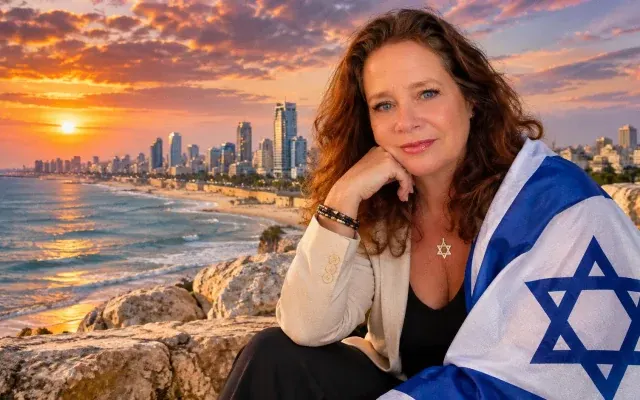
Apparently, we live in an era in which almost every aspect of human identity requires a definition, a classification, an abbreviation or an additional letter. We have the entire LGBTQ+ spectrum, encompassing different sexual orientations and gender identities, and the vocabulary surrounding identity seems to expand almost daily. Sometimes, I cannot help but observe these developments with a certain fascination and ask myself in what kind of parallel universe humanity has ended up. Perhaps I am exceptionally boring. A heterosexual woman with XX chromosomes who, as a little girl, admittedly envied males enormously. Perhaps I was the very embodiment of a girl with Sigmund Freud’s concept of penis envy. I envied their freedom, their independence, their strength and the apparent absence of endless emotional complications. Nevertheless, it all turned out remarkably well and, according to contemporary standards, rather boring. I am a woman, and I am as heterosexual as a woman can possibly be.
But newsflash! I would like to introduce another T to the LGBTQ+ abbreviation. I am transgeographical. I was born in the wrong country.
Before anyone takes my newly invented classification too seriously, allow me some satire. But beneath that satire lies an incredibly deep and painful truth that has accompanied me throughout almost my entire life. As a nonreligious person, I only truly feel at home in Israel. From a very early age, I called the Netherlands Horrorland, even before I had ever visited Israel. There was something about the country of my birth that never felt right, something I could not explain as a child and something that, after almost sixty years, I still struggle to put into words. The very first steps I took on Israeli soil gave me an almost inexplicable energy that brought me to tears. It was not a religious revelation, nor was it something anyone had taught me to feel. It was an overwhelming sensation of recognition, as though I had finally arrived somewhere I was always supposed to be. That love never disappeared again.
In the Netherlands, I have virtually no friends. I am different, fundamentally different from most people around me. Men sometimes seem to appreciate me, although their interest is not always particularly intellectual, to put it diplomatically. Most of the women I encounter seem to have considerable difficulty with my personality. Perhaps I am too honest, too direct, too independent or simply unwilling to participate in the endless theatre of social expectations. I do not care for drama, keeping up appearances or pretending to like someone when I do not. I am brutally honest. What you see is what you get. There is no hidden agenda, no carefully constructed personality designed to gain social acceptance, and certainly no instruction manual explaining how to interpret my words. I usually mean exactly what I say, which apparently is a rather inconvenient personality trait.
And then there is Israel.
A country where bluntness is almost a national sport, where a heated argument does not necessarily mean the end of a friendship, and where people can disagree passionately and still invite each other to dinner. A country where people understand what they are fighting for, where courage is not merely an attractive word printed on a motivational poster, but something that so many people have been required to demonstrate throughout their lives. Ein li eretz acheret, I have no other land. There is something profoundly beautiful about those words. There is no time for endlessly keeping up appearances when the very existence of your country is repeatedly challenged. Life is too precious, too fragile and too unpredictable to waste it pretending to be someone you are not.
In Israel, I have friends, both male and female. I have people whom I admire with every cell of my body, people whose courage, intelligence, determination and humanity leave me speechless. For those people and for that country, I would risk my life without hesitation. And the Netherlands? Horrorland, as I have affectionately, or rather unaffectionately, called it since childhood? I feel no comparable attachment. Even its landscapes leave me cold, flat and monotonous, almost symbolic of the emotional emptiness I so often experience there. I despise the cowardice I encounter when people refuse to stand up for what is right because doing so might cost them their comfortable social position. I cannot understand people who remain silent when their conscience should be screaming.
Israel, on the other hand, is an extraordinary collection of contrasts. From the green hills of the Golan to the magnificent silence of the Negev desert, from the Mediterranean Sea to the Jordan River, from ancient stones carrying thousands of years of history to the modern skyline of Tel Aviv. Within such a geographically small country exists an almost overwhelming diversity of landscapes, cultures, personalities and human experiences. But above everything else, it is the Israeli spirit that captured my heart.
And there, among those extraordinary people, I found someone who, to me, is the very embodiment of a superhero. Not the fictional kind wearing a ridiculous costume and flying between skyscrapers, but a real human being whose courage, intelligence, accomplishments, resilience and humanity inspire admiration beyond anything I can properly express. Someone whose positive spirit continues to fascinate me, despite the enormous responsibilities and challenges life has placed upon his shoulders. When I look at him and consider everything he represents, I sometimes feel that I am not even important enough to walk in his shadow. And yet, this extraordinary person looks at me, acknowledges me, listens to me and makes me feel that I am allowed to be exactly who I am. He has no idea how much that means to someone who has spent most of her life feeling like a stranger in her own country.
And it is not only him. There are others in Israel who have welcomed me into their lives, who have opened their doors, literally and figuratively, without demanding that I change my personality or become a more socially acceptable version of myself. People who make me feel that my presence is appreciated rather than merely tolerated. That is something no passport, birthplace or official document can create. That is belonging. That is home. That is the Israeli spirit I fell in love with as a child and continue to love unconditionally today.
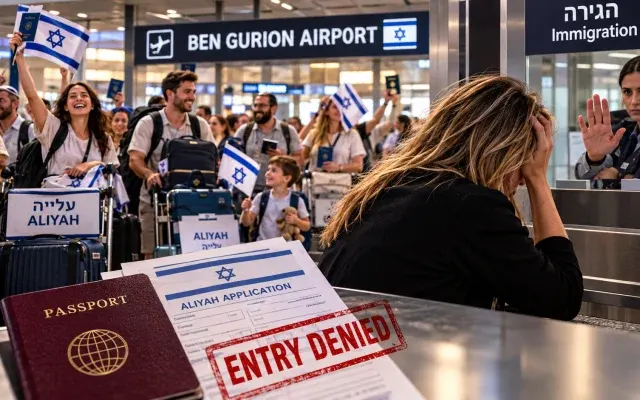
My greatest wish is to live in Israel one day, in the country that holds both my heart and my soul. Whether I will ever succeed remains uncertain, and that uncertainty hurts more than most people will ever understand. Imagine spending almost your entire life knowing where you belong, yet being unable to make that place your permanent home. Imagine repeatedly leaving the country you love and returning to a country where you have never felt that same sense of belonging. There is something heartbreaking about being homesick for a country in which you were not born.
A passport tells the world where I come from, but it does not tell the world who I am. My birthplace was an accident of geography, not a definition of my soul. I did not choose where I was born, but I know where my heart belongs. No government, bureaucratic procedure or official document can change that emotional reality.
So, in this modern world where everyone seems to be searching for a definition of their identity, I have finally invented mine.
I am transgeographical.
I was born in the Netherlands, but my heart was born in Israel.
Ein li eretz acheret.