Silence Is Not Safety
Is hiding your identity a sign of cowardice, or is it wisdom? This is a painful question many Jews in Europe are asking themselves today. In cities that once promised freedom, tolerance, and diversity, Jewish communities increasingly feel pressure to become invisible. When people feel forced to hide who they are simply to avoid harassment or violence, something has gone terribly wrong.
This week a municipal debate took place in Amsterdam about antisemitism and the future of Jewish life in the city. What should have been a routine political discussion became something much more emotional and revealing. The debate showed how deeply the problem has penetrated society.
A 15-year-old Jewish boy told a story that left the room silent. His words were so powerful that Amsterdam alderman Melanie van der Horst was moved to tears. The meeting itself had to be held at a secret location because of security concerns. That fact alone says everything about the current climate. If a democratic city must hide a debate about antisemitism, the situation is already deeply troubling.
The young boy explained that after the pogrom of October 7, 2023, everything changed for Jewish students like him. Many of his friends have already left Amsterdam. They no longer see a future there. They feel unsafe and increasingly believe that there is less and less space to live openly as Jews.
His words were simple but heartbreaking. Many of my friends are gone, he said. They do not see a future here anymore. I hope you will make sure the Jewish community can continue to exist in this city.
The room that had earlier been filled with heated political discussion suddenly fell silent. Van der Horst, visibly emotional, responded that these are the stories of all of us. This is about Jewish life in our city. She also shared that the subject touches her personally because she has what she called a Jewish bonus child in her family. Her message was that people should stop fighting each other and ensure that everyone in Amsterdam can be themselves.
But good intentions alone are not enough.
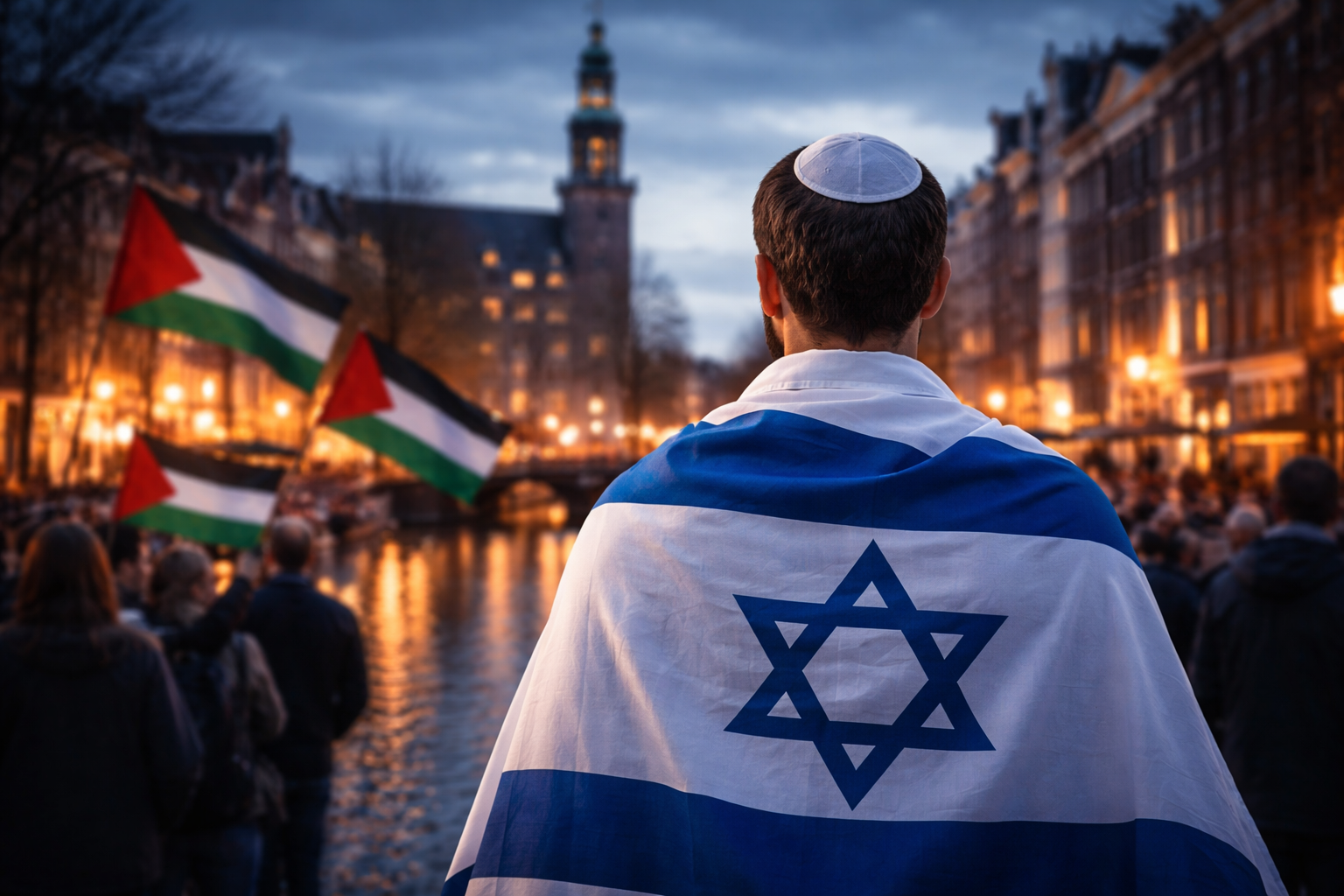
During the debate, CDA politician Rogier Havelaar raised an important question. How must it feel for Jewish residents to walk every day through train stations or city squares where demonstrations take place in which their country and their people are shouted down and insulted? Pro Palestinian protests are now a daily reality in parts of the city, and the rhetoric used at these events often crosses the line from political criticism into open hostility toward Jews.
Another participant, Sytze Rijpkema from JA21, proposed an unusual measure. He suggested using undercover police officers wearing a kippah in order to catch antisemites in the act. According to him, making officers visibly appear Jewish could help identify offenders more quickly. Critics argued that investigative methods should be decided by the police themselves and warned that such tactics might carry risks. Rijpkema insisted that creative measures are necessary if antisemitism is to be addressed effectively.
Another disturbing issue was raised during the discussion. Jewish organizations sometimes struggle simply to rent a hall for meetings or cultural events. Concerts and gatherings are occasionally denied venues. For many observers this is a quiet form of discrimination that rarely makes headlines but contributes to a growing feeling of exclusion.
These developments raise a difficult but necessary question for Jewish communities themselves. Is remaining silent the safest option, or does silence allow hatred to grow unchecked?
If people hide their identity and stay quiet, antisemites face no consequences. When intimidation succeeds, it encourages those who spread hate. History has shown many times that antisemitism grows strongest when it meets no resistance.
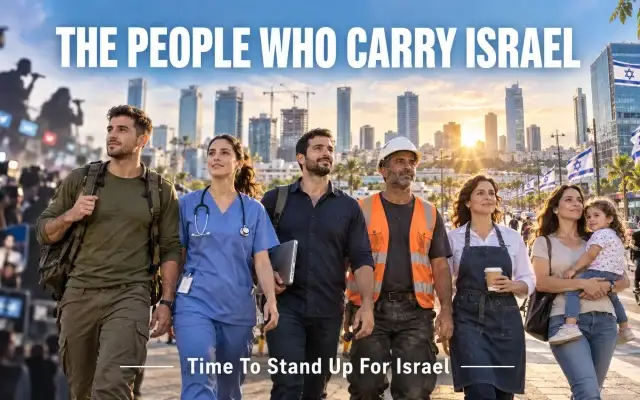
There must be less fear and more courage. Schools must teach historical facts rather than political narratives that distort reality. Civil society organizations must have the freedom to speak openly and publish factual information. Foundations such as Time To Stand Up For Israel work precisely to counter misinformation with facts and context, yet their voices are often excluded from mainstream media discussions.
In the Netherlands, major outlets such as the national broadcaster NOS and many newspapers frequently present a distorted picture of Israel. Complex realities are reduced to simplistic narratives in which Israel is portrayed primarily as an aggressor while the threats it faces are minimized or ignored. This media imbalance shapes public perception and contributes to the hostile environment Jews increasingly experience in Europe.
Correcting this misinformation is essential. Public debate must be based on facts, history, and context rather than slogans and activism disguised as journalism.
At the same time, Jewish communities must remember an important lesson from history. Never again is not just a phrase. It must be a principle expressed through action.
That means teaching the next generation confidence and resilience. It means ensuring that Jewish children grow up proud of who they are rather than afraid to show it. It means learning self defense, including disciplines such as Krav Maga, which was developed in Israel precisely so that Jews would never again be defenseless in the face of violence.
Strength does not mean seeking confrontation. It means refusing to surrender identity and dignity to intimidation.
The young boy in Amsterdam asked a simple question without even realizing it. Will the Jewish community still exist here in the future?
The answer depends on many things. It depends on political leadership that takes antisemitism seriously. It depends on honest journalism. It depends on education that teaches truth instead of propaganda.
But it also depends on courage.
Because silence has never protected Jews. Visibility, resilience, and truth have always been the forces that kept Jewish life alive.
And today, more than ever, those forces are needed again.